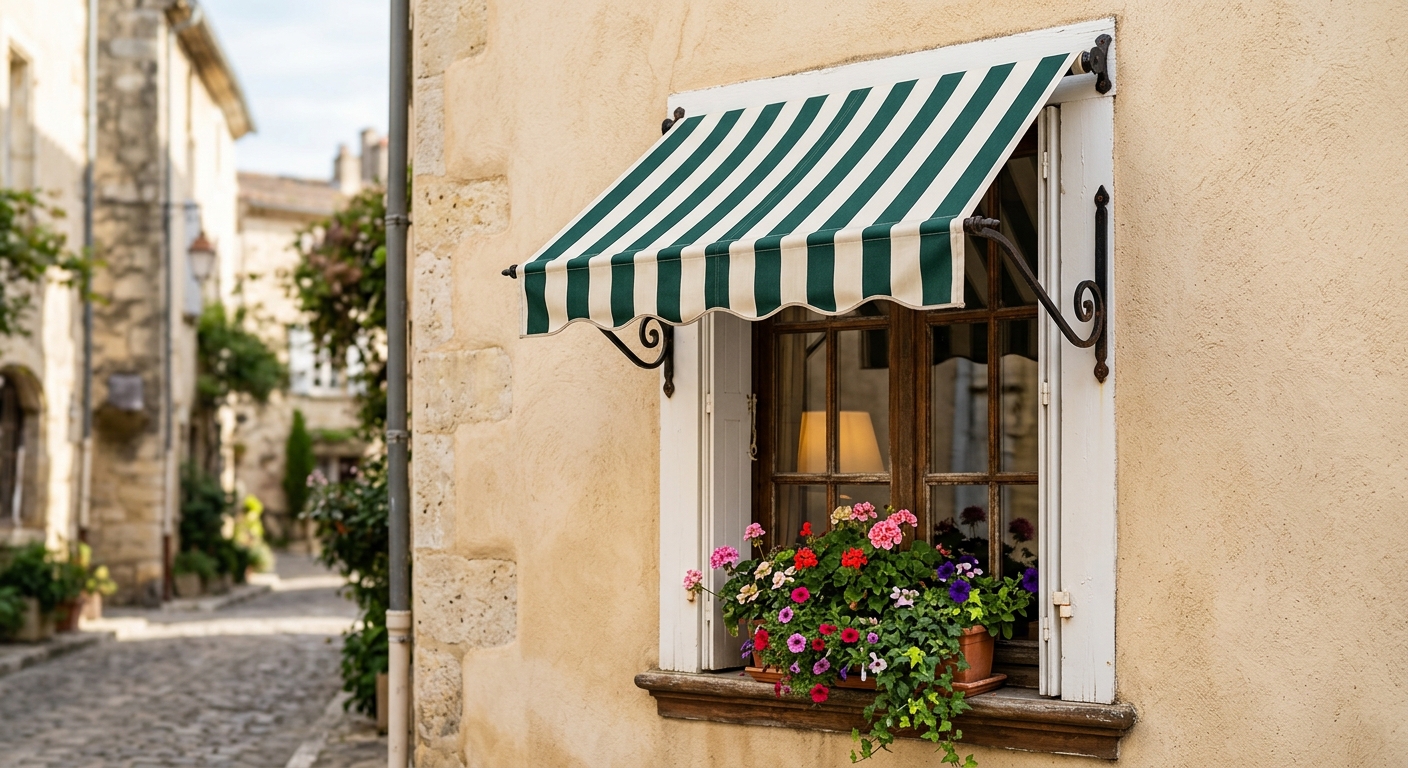
How exterior shading reduces cooling costs significantly
How Exterior Shading Reduces Cooling Costs Significantly
Reading time: 12 minutes
Here’s a scenario worth considering: it’s July 2026, your air conditioning unit is running nonstop, and your electricity bill has climbed to a figure that makes you wince. Sound familiar? Millions of homeowners and building managers across North America, Europe, and Asia are in exactly this position right now — paying a premium to cool spaces that could, with the right exterior design choices, stay naturally cooler without the mechanical burden.
The good news? There’s a remarkably effective, often underutilized strategy sitting right outside your windows. Exterior shading — from overhangs and awnings to louvers, pergolas, and strategic vegetation — can dramatically reduce the amount of solar heat entering a building before it ever touches the glass. Understanding solar gain is the starting point for appreciating just how powerful this approach can be.
This isn’t a niche architectural concept anymore. With energy costs at record highs in 2026 and climate targets pushing both residential and commercial sectors toward smarter building practices, exterior shading has moved firmly into the mainstream. Let’s break down exactly how it works, what the data says, and how you can apply it — whether you’re renovating a family home or managing a commercial portfolio.
Table of Contents
- The Science Behind Solar Heat Gain
- Types of Exterior Shading Systems
- Quantifying the Cooling Cost Reduction
- Real-World Case Studies
- Common Challenges and How to Overcome Them
- Exterior vs. Interior Shading: A Direct Comparison
- FAQs
- Your Cool Building Roadmap: Next Steps
The Science Behind Solar Heat Gain
Before diving into solutions, it’s worth understanding the problem with precision. Windows and walls absorb solar radiation during daylight hours, converting that energy into heat inside the building. On a clear summer day, a standard double-glazed south-facing window can allow between 300 and 500 watts of heat per square meter to enter a room — equivalent to leaving several incandescent bulbs burning continuously.
This solar heat gain is the primary driver of cooling loads in most climates from spring through early autumn. Your air conditioning system then has to work overtime to remove that heat, consuming significant electrical energy in the process. The logic of exterior shading is elegantly simple: intercept the solar radiation before it reaches the building envelope, and you eliminate the heat at its source rather than fighting it after the fact.
Why Exterior Shading Outperforms Interior Solutions
Interior blinds, curtains, and shades are useful, but they have a fundamental limitation — by the time solar radiation passes through the glass and hits an interior blind, a significant portion of that heat energy has already entered the room. The glass has absorbed and re-radiated much of it inward. Exterior shading systems, by contrast, block radiation before it reaches the glass entirely.
Studies from the Lawrence Berkeley National Laboratory (updated findings as of 2025) confirm that well-designed exterior shading can block up to 80–90% of solar heat gain through windows, compared to just 40–50% for interior solutions like reflective blinds. That gap translates directly into dollars on your utility bill and years off your HVAC system’s lifespan.
The Role of Orientation and Season
Not all facades are created equal. South-facing windows in the Northern Hemisphere receive the most intense direct sunlight during midday hours, particularly in summer. West-facing windows catch the brutal low-angle afternoon sun, which is especially difficult to manage and contributes to the notorious late-afternoon heat spike that pushes buildings beyond comfortable temperatures.
Effective exterior shading design accounts for solar angles across seasons. A well-calculated horizontal overhang on a south-facing window, for example, can be sized to block summer sun (when the solar angle is high) while still allowing winter sun to penetrate and provide passive solar heating — a dual benefit that makes this approach genuinely clever engineering, not just a cooling trick.
Types of Exterior Shading Systems
The category of exterior shading covers a wide spectrum of solutions, from permanent architectural features to flexible, retractable systems. Knowing your options helps you match the right approach to your specific building, climate, and budget.
Fixed Architectural Elements
Overhangs and eaves are the most traditional form of exterior shading and remain among the most cost-effective. A properly designed overhang — typically projecting 45–60% of the window height for south-facing walls — provides seasonal shading with zero ongoing maintenance or operational cost. Many vernacular architectural traditions around the world independently arrived at this solution long before modern building science validated it.
Brise-soleil systems (horizontal or vertical fins attached to the building facade) are increasingly popular in commercial architecture. These fixed louvers can be precisely angled to address specific solar angles while maintaining views and natural ventilation. In 2025 and 2026, several major commercial projects across Dubai, Singapore, and Houston have featured brise-soleil as a central energy strategy, contributing to LEED Platinum certifications.
Deep-set windows and recessed facades use the building’s own mass to create shadow. While this approach is most relevant during new construction, it represents a powerful passive strategy that requires no maintenance and adds architectural character.
Retractable and Adjustable Systems
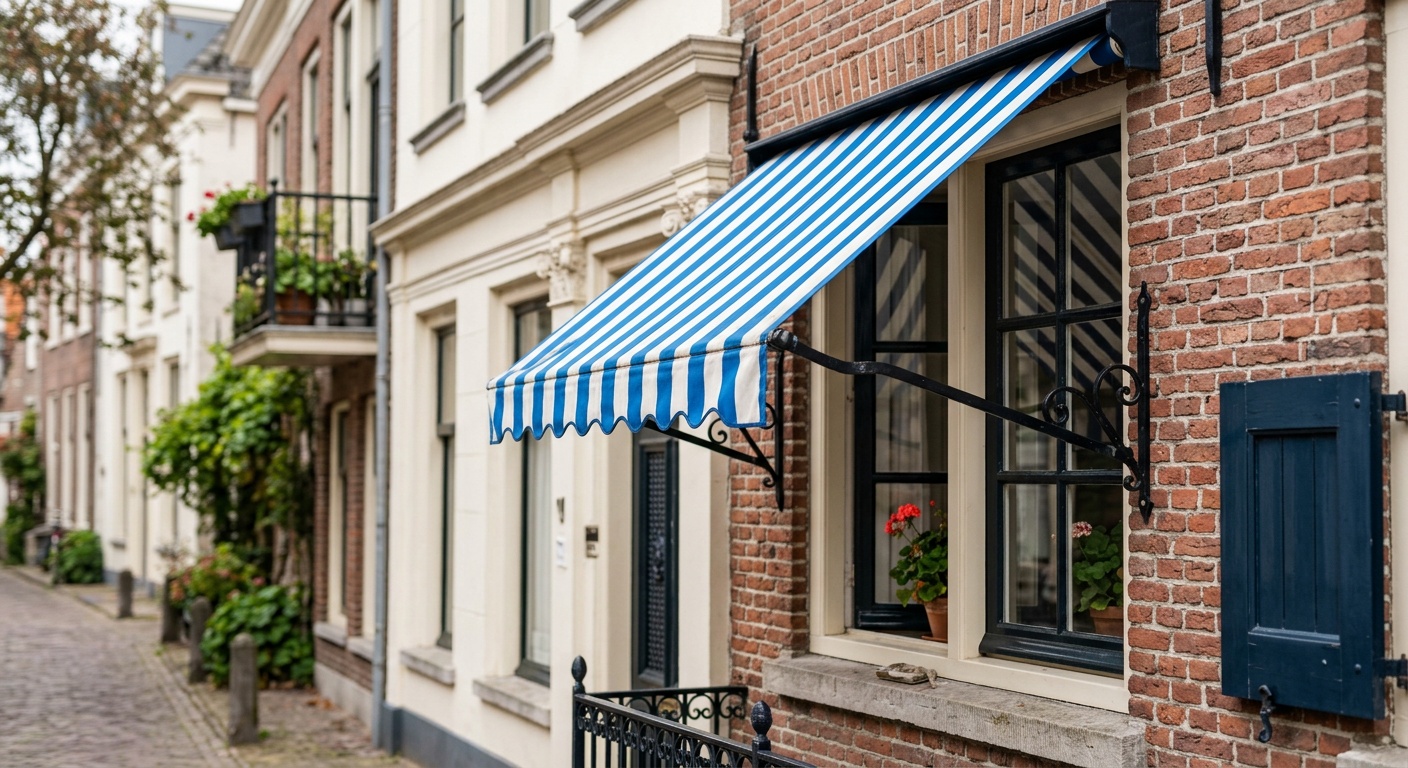
Motorized awnings have become significantly more sophisticated since 2023, with smart-home integration allowing automatic deployment based on sun position, temperature, and weather forecasts. Modern motorized fabric awnings can reduce solar heat gain by 65–77% when deployed and retract completely during overcast periods or high winds, maintaining flexibility across weather conditions.
Adjustable exterior louvers and solar shading screens offer the best of both worlds — precise solar control that can be tuned for different times of day or year. These systems have seen considerable technological advancement, with electrochromic and motorized variants now accessible to residential buyers at price points that were unimaginable just five years ago.
Vegetation-Based Shading
Deciduous trees and climbing plants offer a uniquely elegant solution: natural leaf cover shades walls and windows during summer, while bare branches in winter allow solar gain for passive heating. A mature deciduous tree positioned correctly on the south or west side of a home can reduce cooling costs by an estimated 15–35%, according to the U.S. Department of Energy’s 2025 residential energy efficiency guidance.
Green walls (vertical gardens on building facades) combine insulation with evaporative cooling effects, reducing surface temperatures by up to 10°C compared to bare walls. While installation costs are higher, the combination of cooling, acoustic, and aesthetic benefits makes them a compelling choice for urban buildings with limited ground space.
Quantifying the Cooling Cost Reduction
Talking about “significant” savings is meaningful only when we put numbers to it. Let’s look at what research and real-world implementation data actually show for 2026.
The American Society of Heating, Refrigerating and Air-Conditioning Engineers (ASHRAE) published updated modeling data in late 2025 showing that comprehensive exterior shading programs in climate zones 2 through 5 (covering most of the southern and central United States) can reduce HVAC cooling loads by 20–45%, depending on building type, window-to-wall ratio, and shading design quality.
For a typical 2,000 square foot home in Phoenix, Arizona — where summer cooling represents a dominant portion of annual energy spend — that translates to estimated annual savings of $400–$900 based on 2026 utility rate averages. For a mid-size commercial office building of 50,000 square feet in the same climate, modeled savings frequently exceed $25,000–$60,000 per year.
In European contexts, the European Commission’s BUILD UP platform reported in 2025 that retrofitting existing buildings with exterior shading systems was among the top three highest-return energy efficiency interventions, with typical payback periods of 3–7 years for awning and external blind systems, and potentially 10–15 years for more substantial architectural additions.
70%
75%
65%
30%
45%
Source: Compiled from ASHRAE 2025 data and Lawrence Berkeley National Laboratory studies
Real-World Case Studies
Case Study 1: A Houston Office Tower Retrofit (2024–2025)
A 12-story commercial office building in downtown Houston completed an exterior shading retrofit in mid-2024, adding motorized aluminum louver systems across all south and west-facing glazing (approximately 4,200 square meters total). The building management team published performance data in early 2026 showing a 38% reduction in peak cooling demand compared to the pre-retrofit baseline. Annual energy cost savings came in at approximately $87,000, against an installation cost of $310,000 — projecting a payback period of just under 3.6 years at 2026 energy prices.
Equally noteworthy: tenant comfort surveys showed a significant improvement in workspace satisfaction, particularly in the afternoon hours when west-facing offices had previously been uncomfortably warm despite full air conditioning. This improved occupant experience contributed to stronger lease renewal rates — a financial benefit that doesn’t even appear in the direct energy calculation.
Case Study 2: A Residential Retrofit in Southern Spain
A family in Seville, Spain retrofitted their two-story home with a combination of fixed terracotta brise-soleil on south-facing windows and motorized exterior roller shades on east and west facades in summer 2023. Monitored energy data through 2025 showed their summer electricity consumption (June–September) dropped by an average of 41% compared to the previous three-year average. The homeowners reported that interior temperatures remained below 26°C on most days without mechanical cooling — a result that would have been essentially impossible before the retrofit given Seville’s extreme summer temperatures.
The total project cost was approximately €8,400, and with regional energy efficiency grants available in Spain in 2024, their net out-of-pocket cost was closer to €5,100. At current Spanish electricity prices, the payback period is estimated at four to five years — after which the savings are effectively pure financial gain.
Common Challenges and How to Overcome Them
Exterior shading is compelling on paper, but implementation comes with real-world challenges. Let’s address the three most common ones directly.
Challenge 1: Upfront Cost and ROI Uncertainty
Many homeowners and facilities managers hesitate at the initial investment, particularly for higher-end systems like motorized louvers or structural overhangs. The key is accurate modeling before commitment. Free and low-cost energy modeling tools — including updated versions of EnergyPlus and the Department of Energy’s BEOPT software — allow you to simulate expected savings specific to your building geometry, orientation, climate zone, and energy rates before spending a dollar on installation.
Pro tip: Always model the worst case (lower energy prices, shorter useful life) alongside the expected case. If the project still looks compelling under conservative assumptions, you can proceed with confidence. In most hot and mixed climates in 2026, the math tends to work favorably.
Challenge 2: Balancing Daylighting with Shading
A common concern is that exterior shading will make interiors dark and gloomy. This is a genuine design challenge, but it’s solvable with thoughtful specification. Horizontal overhangs block high-angle summer sun while preserving sky views and diffuse daylight. Perforated screens and open-weave fabrics can block direct solar radiation while maintaining 10–40% visual light transmission — reducing glare without creating a cave-like atmosphere.
Working with a building designer or solar shading specialist who understands shading coefficient and visible light transmittance metrics is essential for getting this balance right. The best systems reduce solar heat gain aggressively while maintaining pleasant, well-lit interiors.
Challenge 3: HOA and Planning Restrictions
In many residential communities and historic urban areas, exterior modifications face approval processes. Before investing in design and specification, research applicable homeowner association (HOA) rules and local planning codes. Many jurisdictions have updated their regulations in 2025–2026 to specifically facilitate energy efficiency improvements, including shading systems — so rules that blocked such projects a few years ago may no longer apply.
When navigating approvals, presenting both the energy savings data and the aesthetic integration clearly tends to accelerate the process. Material samples, renderings, and comparable approved installations in the neighborhood are persuasive tools.
Exterior vs. Interior Shading: A Direct Comparison
To put the case for exterior shading in full context, here’s a comparative overview against interior alternatives. It’s also worth noting that for spaces where full exterior shading installation isn’t feasible — such as rented apartments or certain urban settings — exploring an ac alternative can complement a partial shading strategy effectively.
| Feature | Exterior Shading | Interior Blinds/Curtains | Window Film |
|---|---|---|---|
| Solar Heat Blocking | 65–90% | 25–50% | 30–55% |
| Installation Cost (per m²) | $80–$350+ | $15–$80 | $20–$60 |
| Maintenance Required | Low to Moderate | Low | Very Low |
| Daylighting Impact | Minimal (if designed well) | Moderate to High | Low to Moderate |
| Typical Payback Period | 3–10 years | 1–3 years | 2–5 years |
The table tells a clear story: exterior shading requires a higher initial investment but delivers substantially superior performance where it matters most — actual heat reduction. For buildings in high-solar-gain climates, the performance difference more than justifies the cost gap over a building’s lifespan.
Frequently Asked Questions
Does exterior shading work in cooler climates, or is it only for hot regions?
Exterior shading delivers the most dramatic cooling cost savings in hot and mixed climates, but it’s relevant in a wider range of locations than many people assume. In temperate climates like the UK, northern France, or the Pacific Northwest, summer cooling demands have grown significantly since 2020 due to increasingly intense heat events. The key in cooler climates is to choose adjustable rather than fixed systems, so you can maximize solar gain during winter for passive heating while blocking it during summer. Properly designed retractable awnings or adjustable louvers offer this seasonal flexibility and make economic sense in many temperate locations.
How do I calculate the right overhang depth for my windows?
The classic rule of thumb is to size an overhang projection at approximately 45–60% of the window’s floor-to-top-of-window height for south-facing windows in the Northern Hemisphere. However, precise sizing should account for your specific latitude, window orientation, and desired seasonal performance. Free tools including the Overhang Calculator from the Passive House Institute and the NOAA Solar Calculator can help you model sun angles for your exact location and optimize overhang dimensions. Architects and energy consultants can provide detailed shading masks that show exactly which portions of the sky are blocked at each hour and month — an invaluable planning resource.
Are there government incentives for exterior shading installation in 2026?
Yes, and the landscape has improved considerably. In the United States, the Inflation Reduction Act provisions extended through 2026 allow a 30% federal tax credit for qualifying energy efficiency improvements including exterior shading systems that meet specified energy performance criteria. Several states — California, New York, and Massachusetts among them — offer additional rebates through utility programs. In the EU, national energy efficiency renovation programs in Germany, France, Italy, and Spain all include provisions for exterior solar shading as an eligible measure. Always verify current eligibility requirements with your local energy agency or a qualified contractor before proceeding, as program details evolve annually.
Your Cool Building Roadmap: Next Steps
You’ve now got a solid foundation — the science, the options, the numbers, and the real-world evidence. Here’s how to turn that knowledge into action:
- Audit your current solar exposure. Spend a summer day observing which facades and windows receive direct sun in the morning, midday, and afternoon. Note where heat buildup is most noticeable. This simple observation will prioritize where shading will have the greatest impact.
- Run the numbers for your building. Use free energy modeling tools (EnergyPlus, BEOPT, or a qualified energy auditor) to quantify expected savings specific to your location and building type. Concrete savings projections make decision-making much easier.
- Match shading type to each facade. South-facing windows often benefit most from fixed horizontal overhangs. East and west facades typically require adjustable solutions or vertical fins. Don’t apply a one-size-fits-all approach.
- Check incentives before finalizing your budget. Federal, state, and local programs may significantly reduce your net installation cost. A few hours of research here can translate to thousands of dollars in savings.
- Pilot before scaling. If you manage a large building or portfolio, consider starting with a single high-solar-exposure facade as a monitored pilot. Real performance data from your own building is more persuasive than any generalized statistic when making larger investment cases.
As urban heat islands intensify and energy costs continue their upward trend through the late 2020s, exterior shading is evolving from a nice-to-have into a standard feature of responsible building design and management. The buildings that invest in these strategies now will carry a lasting competitive and financial advantage.
Here’s the question worth sitting with: If your building’s cooling system is working hardest from June through September, how much of that work is actually fighting heat that good exterior shading could have prevented entirely? The answer, for most buildings, is more than you’d expect — and the opportunity to change that starts with the next design or renovation decision you make.
Article reviewed by Mike O’Brien, Drywall Installation & Surface Finishing Specialist, on June 8, 2026