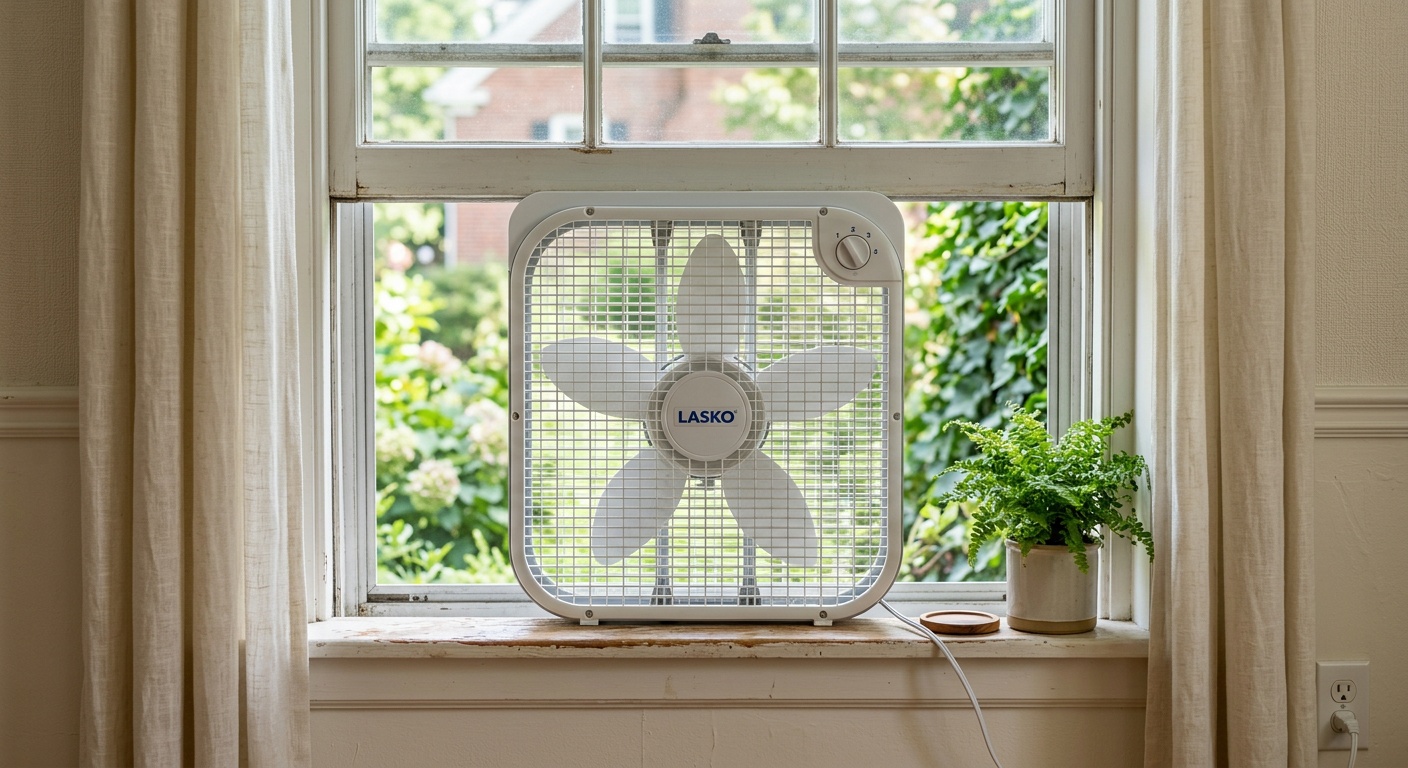
Cooling Upgrades That Cut Summer Bills Without Central AC
Cooling Upgrades That Cut Summer Bills Without Central AC
Reading time: 12 minutes
Summer arrives, temperatures climb past 95°F, and your electricity bill quietly prepares to ruin your month. If you’re among the estimated 30% of American households that still don’t have central air conditioning — or simply refuse to run it constantly — you already know the frustration of searching for solutions that actually work without costing a fortune.
Here’s the straight talk: you don’t need a central AC system to stay genuinely comfortable all summer. What you need is a strategic combination of upgrades and habits that work with your home’s natural dynamics rather than fighting them. In 2026, with average residential electricity rates hovering around 17.5 cents per kilowatt-hour (up from 15.9 cents in 2024 according to U.S. Energy Information Administration projections), every degree of passive cooling you can achieve translates directly into money saved.
This guide breaks down exactly which upgrades deliver the biggest return on comfort and investment, how to layer them effectively, and what real households are doing right now to stay cool without central AC. Whether you’re renting, owning, working with a tight budget, or ready to invest in your home, there’s a practical path here for you.
Table of Contents
- Why Central AC Isn’t the Only Answer
- Airflow First: The Foundation of Every Cool Home
- Smart Window Strategies That Block Heat Before It Enters
- Targeted Cooling Solutions for Every Room
- Insulation and Sealing: The Invisible Upgrade
- Comparing Cooling Solutions: Cost vs. Impact
- Real-World Examples: How Homeowners Are Doing It in 2026
- Frequently Asked Questions
- Your Cool Home Action Plan
Why Central AC Isn’t the Only Answer
Central air conditioning is often treated as the default solution to summer heat — a kind of upgrade that signals you’ve “arrived” as a homeowner. But the reality is more nuanced. A central AC system costs anywhere from $3,800 to $7,500 installed in 2026, requires professional maintenance, and can spike monthly electricity bills by $150–$300 during peak summer months depending on your climate zone.
More importantly, central AC is a blunt instrument. It cools spaces you may not be using, loses efficiency in homes with poor insulation, and does nothing about the root causes of heat gain — like sun-facing windows, heat-trapping roofs, or inadequate attic ventilation.
The smarter approach? Attack heat gain at its source, manage airflow strategically, and deploy targeted cooling only where and when you need it. This layered methodology can reduce indoor temperatures by 8–15°F in most climates — without running a single BTU of central air conditioning.
“The homes that stay coolest without central AC aren’t the ones with the most fans or window units — they’re the ones that have fundamentally reduced their heat load through smart design choices.” — Dr. Ariel Fontaine, Building Science Consultant, Passive Cooling Institute, 2025
Airflow First: The Foundation of Every Cool Home
Before you spend a single dollar on any cooling device, get your airflow right. This is the single highest-leverage thing you can do, and much of it is free or nearly free.
The Cross-Ventilation Principle
Cross-ventilation works by creating a pressure differential — warm air is pulled out on one side while cooler air is drawn in from the opposite side. To maximize this effect:
- Open windows on both the windward and leeward sides of your home simultaneously
- Open lower windows on the cool (typically north or east-facing) side to draw in cool air
- Open upper windows or vents on the warm side to let hot air escape, since heat rises
- Use interior doors strategically — keeping hallway doors open creates airflow corridors
The timing matters enormously. In most U.S. climates, outdoor temperatures drop below indoor temperatures between 9 PM and 7 AM during summer. Opening your home during these hours and closing it tight (with window coverings) during the day traps the cool air inside. This technique alone, consistently applied, can reduce indoor temperatures by 4–7°F compared to leaving windows closed day and night.
Ceiling Fans: The Underrated Workhorse
A ceiling fan is one of the most cost-effective cooling upgrades available to any homeowner or renter. A quality ceiling fan costs $60–$250, uses only 15–75 watts of electricity, and creates a wind-chill effect that makes a room feel 4–8°F cooler than it actually is — without changing the actual air temperature.
The key details that most people miss:
- Direction matters: In summer, ceiling fans should spin counterclockwise (when viewed from below) to push air downward and create that cooling breeze
- Speed matters: Higher speeds create stronger wind-chill effects but don’t change the underlying temperature — turn them off when you leave the room
- Placement matters: Fans are most effective when positioned 7–9 feet above the floor with at least 18 inches of clearance from the ceiling
- ENERGY STAR certification: ENERGY STAR-certified ceiling fans use 60% less energy than conventional models while moving the same amount of air
Running a ceiling fan costs roughly $0.01–$0.03 per hour versus $0.15–$0.40 per hour for a window AC unit. If a fan lets you raise your thermostat by just 4°F (or avoid running a window unit for a few hours each day), the savings compound quickly across a three-month summer season.
Whole-House Fans: A Powerful Upgrade for Eligible Climates
If cross-ventilation and ceiling fans are steps one and two, a whole-house fan is step three — and it’s a significant leap in capability. Installed in the ceiling between your living space and attic, a whole-house fan pulls hot air out of your home and through the attic at rates of 3,000–6,000 cubic feet per minute.
Modern whole-house fans (like the QuietCool QC CL-3100 or the Tamarack HV1000) are dramatically quieter than older models and cost $300–$900 installed. They work best in climates where evenings and nights cool down significantly — the American Southwest, Pacific Northwest, Midwest, and mountain regions are ideal. They’re less effective in consistently humid climates like the Gulf Coast or Florida, where nighttime temperatures stay high.
When conditions are right, a whole-house fan can cool your home down by 10–15°F within 30–60 minutes of operation, using only 200–600 watts — roughly the same as a large window fan.
Smart Window Strategies That Block Heat Before It Enters
Windows are your home’s primary solar heat gain vulnerability. According to the U.S. Department of Energy, about 76% of sunlight that falls on standard double-pane windows enters your home as heat. In a typical house with significant south- and west-facing window exposure, this solar heat gain can add the equivalent of running several space heaters simultaneously during peak afternoon hours.
Window Films: The Renter-Friendly Solution
Solar control window films are thin, adhesive sheets applied directly to glass that block 40–80% of solar heat gain while maintaining visible light transmission. In 2026, the technology has advanced significantly — products like 3M’s Thinsulate Climate Control series and Llumar’s AmbassadorSeries now offer near-invisible options that block up to 78% of infrared heat without significantly darkening your interior.
Cost: $1.50–$8 per square foot for DIY installation, or $5–$15 per square foot professionally installed. For a 1,500 sq ft home with moderate window exposure, total costs typically run $400–$1,200 for professional installation — often recovered in 2–3 cooling seasons through energy savings.
Pro Tip: Focus first on south- and west-facing windows, which receive the most direct afternoon sun. East-facing windows bring morning sun (less intense) and north-facing windows rarely need treatment in North America.
Exterior Shading: The Gold Standard
Here’s a building science truth worth internalizing: blocking heat before it reaches the glass is far more effective than blocking it after it’s already entered. Exterior shading — awnings, exterior roller shades, pergolas, or even strategic landscaping — can reduce solar heat gain through windows by up to 94% compared to roughly 45% for interior blinds.
Options by investment level:
- Budget ($50–$200): Temporary exterior shade cloth panels or retractable awnings for key windows
- Mid-range ($300–$800): Permanent aluminum awnings or retractable fabric awnings for multiple windows
- Investment ($800–$3,000+): Motorized exterior roller shades, pergola systems, or strategic tree planting
Deciduous trees planted on the south and west sides of your home provide summer shade while allowing winter sun through after leaves fall — a genuinely elegant long-term solution that also increases property values.
Targeted Cooling Solutions for Every Room
Once you’ve addressed heat gain and airflow, targeted cooling devices become far more effective — because they’re cooling a smaller effective heat load. This is where portable and room-specific solutions shine.
Evaporative (Swamp) Coolers
In dry climates (relative humidity below 60%), evaporative coolers are extraordinarily efficient. They use the same principle as sweating — evaporating water absorbs heat from the air, reducing temperatures by 15–30°F in appropriate conditions. Modern evaporative coolers use 75% less electricity than comparable refrigerant-based AC units and can be purchased for $150–$600 for room-sized units.
The geographic sweet spots for evaporative cooling include: the American Southwest, Mountain West, Central Plains, and parts of the Midwest. They’re not viable in consistently humid climates like the Southeast, Gulf Coast, or Pacific Northwest coastal areas.
Mini-Split Systems: The Precision Tool
For anyone who wants genuine refrigerant-based cooling without full central AC infrastructure, ductless mini-split systems have become dramatically more accessible. In 2026, DIY-friendly “Mr. Cool” style mini-splits allow homeowners to install a single-zone system for $700–$1,500 in equipment costs (versus $2,500–$5,000 for professional installation).
A single mini-split zone can cool one to three rooms efficiently, using inverter technology that adjusts output based on demand — typically 30–40% more efficient than window AC units. If you’re going to invest in any single-room cooling upgrade, this is the one with the highest performance ceiling.
Personal Cooling: The Last Line of Defense
For those moments when the heat is simply relentless, personal cooling devices are surprisingly effective. Modern personal air coolers, neck fans, cooling towels, and desk-sized evaporative units can make an individual feel significantly more comfortable even when the room temperature is elevated. These products — ranging from $15 to $150 — are an excellent alternative for ac in small spaces like home offices, bedrooms, and studios where cooling the entire space is overkill.
Insulation and Sealing: The Invisible Upgrade
No cooling strategy reaches its full potential in a leaky, poorly insulated home. This section addresses the structural foundation that makes everything else more effective.
Attic Insulation: The Highest-ROI Upgrade
Your attic can reach 150–160°F on a hot summer day. If your attic floor is poorly insulated, that heat radiates directly down into your living space. The U.S. Department of Energy recommends attic insulation of R-38 to R-60 for most U.S. climate zones.
The national average cost for attic insulation is $1,500–$4,000 for professional installation, but many utility companies offer rebates of $200–$800, and the federal 25C energy efficiency tax credit (extended through 2032) covers 30% of installation costs up to $1,200 annually. With those incentives factored in, many homeowners recoup their investment within 3–5 years.
Air Sealing: The Overlooked Energy Drain
The average American home loses 25–40% of its cooling energy through air leaks — gaps around electrical outlets, plumbing penetrations, attic hatches, recessed lights, and poorly sealed windows and doors. A weekend of caulking and weatherstripping (total materials cost: $50–$150) can reduce this loss substantially.
Key spots to target:
- The band/rim joist in the basement or crawl space
- Attic hatch and pull-down stair surrounds
- Gaps around plumbing, electrical, and HVAC penetrations in ceilings and floors
- Window and door frames (interior and exterior)
- Fireplace dampers (keep them closed in summer)
Comparing Cooling Solutions: Cost vs. Impact
| Cooling Solution | Upfront Cost | Hourly Energy Cost | Temp Reduction | Best For |
|---|---|---|---|---|
| Ceiling Fan | $60–$250 | $0.01–$0.03 | Wind-chill 4–8°F | Any room, any climate |
| Window Film | $400–$1,200 | $0 (passive) | 2–6°F whole home | Sun-heavy exposures |
| Evaporative Cooler | $150–$600 | $0.04–$0.08 | 10–25°F (dry climate) | Low-humidity regions |
| Whole-House Fan | $300–$900 | $0.04–$0.10 | 10–15°F overnight | Cool-night climates |
| DIY Mini-Split | $700–$1,500 | $0.10–$0.20 | 20–30°F (zone) | Single-zone precision |
Estimated Monthly Bill Savings by Strategy
$45–$70/mo
$30–$55/mo
$25–$50/mo
$40–$65/mo
$15–$30/mo
Real-World Examples: How Homeowners Are Doing It in 2026
Case Study 1: The Phoenix Apartment Renter
Marisol T., a renter in a second-floor Phoenix apartment, faced summer electricity bills that regularly hit $280–$310 per month running the provided window AC units. In the summer of 2025, she implemented a three-part strategy:
- Applied 3M window film to her three west-facing windows ($180 DIY)
- Added a $220 evaporative cooler in her home office (where she worked remotely)
- Used two $85 ENERGY STAR ceiling fans in the bedroom and living room
The result? Her summer 2025 electricity bills dropped to an average of $167 per month — a savings of roughly $130/month across a four-month peak season, totaling over $520 in annual savings. Her total upfront investment was $570, giving her a payback period of just over one summer season.
Case Study 2: The Portland Bungalow Owner
James and Keiko M. own a 1940s bungalow in Portland, Oregon — a city that saw an unprecedented stretch of 100°F+ days in recent summers. Their home had no AC whatsoever. Rather than installing central AC (which contractors quoted at $6,200), they invested in a different strategy in spring 2025:
- QuietCool whole-house fan installation: $750 (DIY)
- Exterior bamboo roller shades for south and west windows: $420
- Attic air sealing and R-49 blown-in insulation: $1,800 (after utility rebate)
- Two strategic ceiling fan installations: $340
During the summer 2025 heat events, their indoor temperature peaked at 82°F on the hottest days — compared to 94°F inside their neighbor’s similarly-built home without these upgrades. Total investment: $3,310. Total cooling-season electricity cost: under $45. Compare that to central AC installation ($6,200+) plus $120–$180/month in operating costs.
Case Study 3: The Humid Climate Challenge
Not every strategy works everywhere — and it’s worth being honest about that. David R. in Savannah, Georgia tried relying on ceiling fans and cross-ventilation alone for the summer of 2025. By mid-July, with overnight lows staying above 78°F and humidity above 75%, the strategy simply wasn’t sufficient for comfortable sleep.
His adapted solution: a single DIY mini-split in the master bedroom ($1,100 installed), combined with ceiling fans throughout the rest of the house. He only runs the mini-split from 9 PM to 8 AM when he’s sleeping. His monthly electricity cost for summer cooling: $55–$70 — a fraction of what central AC would cost, while maintaining genuine comfort where it matters most.
Frequently Asked Questions
Can I really stay comfortable all summer without any AC at all?
In many climates — particularly those with low humidity or significant day-night temperature swings — yes, it’s genuinely achievable. Climates like Portland, Denver, Phoenix, Seattle, and much of the Mountain West are well-suited to non-AC cooling strategies. In consistently hot and humid climates (Gulf Coast, Florida, Deep South), you’ll likely need some form of refrigerant-based cooling, but targeted approaches like a single bedroom mini-split or window unit can provide comfort for a fraction of the cost of whole-home central AC. The key is honest assessment of your climate and designing your strategy accordingly.
What’s the single highest-impact upgrade I can make for under $300?
If you had to choose one upgrade under $300, the answer depends on your climate. In dry climates, a quality evaporative cooler ($150–$250) is transformative. In humid climates or for whole-home benefit, a combination of two ENERGY STAR ceiling fans ($140–$200 total) plus weatherstripping and caulking ($30–$50) delivers the broadest impact per dollar. If your attic is poorly insulated and you can add blown-in insulation yourself, that investment — even at $250–$350 in materials — typically outperforms any cooling device in terms of long-term impact on indoor temperature.
How do I know if my home is a good candidate for a whole-house fan?
A whole-house fan works best when your outdoor nighttime temperatures drop below your indoor temperature by at least 5–10°F. If your city regularly sees nights below 70°F during summer, you’re likely a good candidate. You also need adequate attic ventilation — at least 1 square foot of attic vent area per 750 CFM of fan capacity. Homes in the Southwest, Mountain West, Pacific Northwest (non-coastal), Midwest, and New England are typically well-suited. Homes in Florida, Louisiana, coastal Texas, and similar high-humidity coastal areas will see limited benefit.
Your Cool Home Action Plan: Start This Week
You don’t need to implement everything at once — and you shouldn’t try to. The most effective approach is sequential, building from free to low-cost to investment-level upgrades as you validate what works in your specific home.
Here’s your practical implementation roadmap:
- This week (free): Master cross-ventilation timing. Open your home from 9 PM to 8 AM, close and shade it during the day. Reverse your ceiling fans to counterclockwise. Add door draft stoppers and caulk any visible gaps around windows. Measure your indoor temperatures before and after to establish your baseline.
- Within 30 days ($50–$300): Install ENERGY STAR ceiling fans in your highest-use rooms. Apply solar control window film to south- and west-facing windows. Add weatherstripping to doors and windows that are leaking air. Get a smart power strip to eliminate phantom loads from appliances that generate heat.
- This summer season ($300–$900): Based on your climate assessment, invest in either a whole-house fan (cool-night climates), an evaporative cooler (dry climates), or exterior shading solutions for your most sun-exposed windows. Each of these investments typically pays for itself within one to two cooling seasons.
- This fall/winter (planning for next summer): Schedule an attic insulation assessment. Many utility companies offer free home energy audits. Apply for the 25C federal tax credit for any insulation or weatherization work done in 2026. Consider adding a single mini-split to your most-used room if your climate demands it.
- Long-term (2–5 years): Consider strategic tree planting on south and west exposures — trees that reach 20–25 feet can reduce cooling loads by 25–30% and increase property values by 3–15% according to the Arbor Day Foundation’s 2024 research.
The broader trend is clear: as electricity prices continue rising and climate patterns make summers more intense, homes that have invested in passive cooling infrastructure will carry a genuine financial and quality-of-life advantage over those depending entirely on energy-hungry central systems. You’re not just saving money this summer — you’re future-proofing your home.
Here’s the question worth sitting with: What’s one upgrade from this list that you could realistically implement in the next seven days? Start there. Momentum matters more than perfection, and a cooler home this summer is closer than you think.
Article reviewed by Mike O’Brien, Drywall Installation & Surface Finishing Specialist, on July 15, 2026