Smart Meters and Energy Habits: How to Save on UK Energy Bills
Smart Meters and Energy Habits: How to Save on UK Energy Bills
Reading time: 12 minutes
Picture this: it’s January 2026, the heating is running, your kettle has boiled three times this morning, and you have absolutely no idea how much all of that is costing you — until the bill arrives. Sound familiar? For millions of UK households, energy costs remain one of the most unpredictable and stress-inducing monthly expenses. But here’s the good news: that information gap is precisely what smart meters were designed to close.
The UK’s smart meter rollout has been one of the most ambitious energy infrastructure programmes in modern history. With over 36 million smart meters now installed across Great Britain as of early 2026, according to the Department for Energy Security and Net Zero, more households than ever have access to real-time energy data. Yet having a smart meter alone doesn’t automatically slash your bills. The magic happens when you pair that technology with smarter energy habits.
This guide cuts through the confusion, offering practical strategies that work whether you’ve had a smart meter for years or you’re just getting one installed. Let’s transform your energy data into real savings.
Table of Contents
- What Is a Smart Meter and How Does It Work?
- The UK Energy Landscape in 2026
- Reading Your Smart Meter Data Like a Pro
- Changing Energy Habits: Where the Real Savings Are
- Smart Tariffs, Apps, and Tools to Maximise Savings
- Common Challenges and How to Overcome Them
- Smart Meter vs. Traditional Meter: A Direct Comparison
- Frequently Asked Questions
- Your Energy Action Plan: Start Saving This Week
What Is a Smart Meter and How Does It Work?
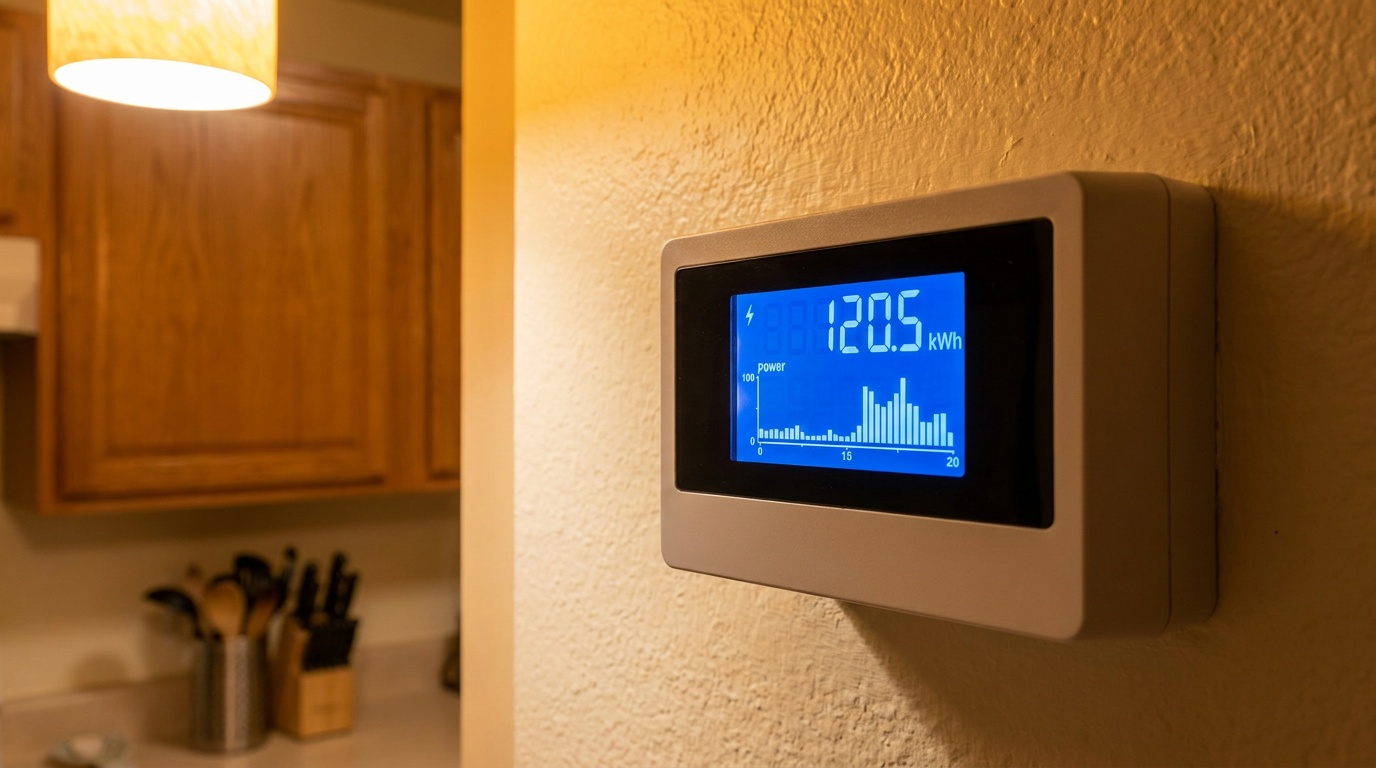
A smart meter is a next-generation gas and electricity meter that automatically sends usage readings to your energy supplier — no more estimated bills, no more meter reader visits. But the feature that changes behaviour is the In-Home Display (IHD), a small screen that shows your energy consumption in near real-time, usually updated every 10 seconds for electricity and every 30 minutes for gas.
The UK has rolled out two generations of smart meters. SMETS1 (first generation) meters had connectivity issues when switching suppliers, causing them to temporarily revert to “dumb” mode. SMETS2 meters, which use the national Data Communications Company (DCC) network, don’t have this problem. By 2026, the vast majority of newly installed meters are SMETS2, and older SMETS1 devices have largely been migrated to the DCC network remotely — meaning the switching problem that plagued early adopters is mostly resolved.
What Data Does a Smart Meter Capture?
Your smart meter captures far more than a simple running total. The IHD and your supplier’s app can typically show you:
- Real-time consumption in kilowatt-hours (kWh) and in pounds and pence
- Daily, weekly, and monthly usage breakdowns
- Comparisons against previous periods
- Carbon emissions associated with your usage (on some platforms)
- Half-hourly data, which is critical for time-of-use tariffs
This granularity is powerful. When you can see that your home uses £1.20 of electricity between 4pm and 7pm on a weekday, you have something concrete to act on.
The UK Energy Landscape in 2026
Understanding the backdrop matters enormously here. The UK energy market has gone through seismic shifts since the 2021–2022 global gas crisis, and 2026 brings its own complexities.
Ofgem’s energy price cap — which limits the unit rate suppliers can charge — stood at £1,738 per year for a typical household (based on average usage) in Q1 2026. While this is a significant improvement from the crisis peaks of 2022 and 2023, it remains substantially higher than pre-crisis levels. Electricity unit rates hover around 24–26p per kWh for most standard tariffs, while gas sits near 6–7p per kWh.
Meanwhile, the UK government’s push toward electrification — heat pumps replacing gas boilers, electric vehicles replacing petrol cars — means electricity demand is rising. This makes understanding when you use electricity increasingly important, not just how much.
“Smart meters are the foundation of the future energy system. They empower consumers to understand their usage, access innovative tariffs, and play an active role in balancing the grid.” — Ofgem Chief Executive, Jonathan Brearley, speaking at the 2025 Energy UK Conference
The Growing Role of Time-of-Use Tariffs
One of the most significant developments in the UK energy market in recent years is the rapid expansion of time-of-use (TOU) tariffs. These tariffs charge different rates depending on when you use electricity — cheaper during off-peak hours (typically overnight and weekends) and more expensive during peak demand periods (usually 4pm–7pm on weekdays).
Octopus Energy’s Agile Octopus tariff, for example, updates prices every 30 minutes based on wholesale electricity costs. On high-renewables days, prices can even go negative — meaning you’re effectively paid to use electricity. By 2026, similar dynamic pricing products are offered by several major suppliers including British Gas, OVO Energy, and EDF. Smart meters with half-hourly data sharing are the essential prerequisite for accessing these products.
Reading Your Smart Meter Data Like a Pro
Most people glance at their IHD occasionally, notice a number, and put it back on the shelf. That approach leaves most of the value on the table. Here’s how to use your data strategically.
Step 1: Establish your baseline. Spend one week simply observing without trying to change anything. What does your electricity use look like overnight when everything is “off”? This figure — your standby load — is your starting point. A typical UK home should have a standby load of around 50–80W. If yours is 200W or higher, something is drawing excessive power constantly, whether it’s an old fridge, a poorly programmed heating system, or a fleet of devices left on standby.
Step 2: Identify your peak usage spikes. Look at your half-hourly data in your supplier’s app. Where are the big spikes? For most households, they align with the morning routine (shower, kettle, toaster), the evening cooking period, and TV/entertainment hours. Knowing this helps you prioritise where to focus your efforts.
Step 3: Conduct the appliance detective test. Switch off everything you can, then turn appliances on one at a time while watching the IHD. This helps you understand which devices are genuine energy hogs. Common culprits include:
- Electric showers (typically 8–10kW per use)
- Tumble dryers (2.5–5kW per cycle)
- Ovens (2–2.5kW)
- Old electric storage heaters (3kW+)
- Desktop computers (often 200–400W)
Changing Energy Habits: Where the Real Savings Are
Here’s the straight talk: insulation and new appliances deliver long-term savings, but habit change is the quickest and cheapest route to immediate bill reduction. Let’s focus on both.
Quick Wins: Habit Changes That Cost Nothing
The most impactful free changes UK households can make in 2026 include:
- Shifting washing machine use to off-peak hours. Running a 7kg washing machine at 40°C during an off-peak period on a TOU tariff can cost under 15p, versus over 50p during peak hours on a standard tariff.
- Reducing thermostat temperature by 1°C. According to the Energy Saving Trust, this single change can save approximately £145 per year on heating bills at 2026 prices.
- Eliminating standby power. UK households waste an estimated £65–£90 per year on devices left on standby, according to the Energy Saving Trust’s 2025 analysis.
- Using the IHD as a behavioural nudge. Research from Imperial College London found that households with active IHD engagement reduced electricity consumption by an average of 3–5% compared to those who ignored their displays.
- Optimising your dishwasher and washing machine temperature. Dropping from 60°C to 40°C, or from 40°C to 30°C, uses significantly less energy per cycle with modern detergents formulated for lower temperatures.
Case Study: The Mitchell Family, Birmingham
Sarah and James Mitchell, a family of four in Birmingham, had their SMETS2 meter installed in early 2025. Their annual electricity bill was running at approximately £1,650 — well above the national average. After spending one month monitoring their IHD data via their supplier’s app, they identified three key issues: an ancient chest freezer in the garage drawing 180W continuously (far above modern standards), a habit of leaving gaming consoles in rest mode overnight, and a tumble dryer running on peak-rate electricity every evening.
They replaced the freezer with an A+++ rated model, configured the consoles to fully power off, switched to a TOU tariff, and moved tumble drying to weekends. Their next annual bill came in at £1,190 — a saving of £460. The freezer replacement cost £280 after a local authority grant, giving them a payback period of under eight months.
Smart Tariffs, Apps, and Tools to Maximise Savings
The smart meter ecosystem has matured considerably by 2026. Here are the key tools worth knowing about:
Supplier Apps: Most major UK energy suppliers now offer detailed consumption dashboards. Octopus Energy’s app is widely praised for its granularity, offering half-hourly charts, cost breakdowns by appliance category (using AI estimation), and bill forecasts. OVO’s app includes a carbon tracker and personalised efficiency tips based on your usage profile.
Third-Party Energy Monitoring Apps: Apps like Loop and Hugo connect to your smart meter data (via your supplier’s API or the SMETS2 network) and provide additional analysis, including estimated appliance-level breakdowns, peer comparison with similar households, and automated alerts when your usage is unusually high.
Smart Home Integration: If you have a smart home setup — Amazon Echo, Google Home, or Apple HomeKit — you can integrate energy monitoring to receive voice alerts, automate devices to run during cheap-rate periods, and create routines that reduce peak demand. Octopus Agile integrates directly with many smart plugs and EV chargers to automatically schedule charging when prices are lowest.
EV Charging Optimisation: For the growing number of UK EV drivers, smart meter integration is particularly valuable. With around 1.8 million EVs on UK roads as of early 2026, dedicated EV tariffs from suppliers like Octopus (Go tariff) and British Gas (Electric Drivers tariff) offer ultra-cheap overnight rates (sometimes as low as 7p/kWh) specifically for home charging. A smart meter is required to access these products.
Common Challenges and How to Overcome Them
Even in 2026, smart meters and their ecosystem come with genuine frustrations. Here’s how to navigate the most common ones.
Challenge 1: The IHD has stopped working or lost connection. This is more common than suppliers like to admit. First, try moving the IHD closer to the meter (walls and distance affect signal strength). If that doesn’t help, contact your supplier — they can often push a remote reconnection. If your meter is SMETS1 and still not connected to the DCC network, request an upgrade; most suppliers are obligated to facilitate this at no cost.
Challenge 2: Half-hourly data isn’t appearing in apps. To access half-hourly data, you need to grant explicit consent through your supplier’s app or website. Many people install a smart meter but never complete this step, missing out on the richer data that enables TOU tariffs and detailed analysis. Log in to your supplier account and look for data-sharing or privacy settings.
Challenge 3: Bills don’t seem to be decreasing despite changes. This is a common source of frustration. The issue is often that wholesale price increases offset behavioural savings — you may be using 10% less energy but paying the same or more due to unit rate increases. The solution is to track kWh consumption rather than pound amounts as your primary success metric, and to ensure you’re on the most competitive tariff. Switching tariffs within your supplier or switching suppliers entirely remains one of the highest-impact actions. Use a comparison site like Uswitch or MoneySuperMarket — both now incorporate smart meter compatibility filters in their 2026 interfaces.
Smart Meter vs. Traditional Meter: A Direct Comparison
| Feature | Smart Meter (SMETS2) | Traditional Meter |
|---|---|---|
| Bill Accuracy | Automatic actual reads — always accurate | Estimated bills common; requires manual reads |
| Real-Time Data | Yes — updated every 10–30 seconds via IHD | No — data only available on bill receipt |
| Tariff Access | Time-of-use, dynamic, EV tariffs available | Standard fixed-rate tariffs only |
| Estimated Annual Saving | £100–£500+ (with active engagement) | No inherent saving mechanism |
| Supplier Switching | Seamless on SMETS2 — smart functions retained | Straightforward but no data continuity |
Potential Annual Savings by Action Type
Estimated Annual Savings for a Typical UK Household (2026)
£360/yr
£145/yr
£80/yr
£120/yr
£200/yr
Case Study: Tom’s Off-Grid Experiment, Rural Yorkshire
Tom Hendricks, a semi-retired engineer in North Yorkshire, took a different approach to smart energy management in 2025. After installing solar panels alongside his SMETS2 meter in early 2025, he used his smart export guarantee (SEG) payments alongside Agile Octopus import rates to effectively trade his solar energy. On sunny summer days, he’d run energy-intensive tasks (dishwasher, washing machine, slow cooker, EV charge) during periods of solar generation, export the surplus, and receive SEG payments averaging 15p/kWh.
Tom’s net energy cost for 2025 was just £380 — compared to an estimated £1,500+ without the system. His smart meter data was central to the strategy, allowing him to monitor generation vs. consumption in real time and fine-tune his behaviour daily. His story illustrates the upper ceiling of what’s possible when smart meter technology, renewable generation, and engaged behaviour combine.
Frequently Asked Questions
Do I have to accept a smart meter if my supplier offers one?
No. As of 2026, smart meter installation in the UK remains voluntary for domestic households. Your supplier cannot force you to have one installed. However, opting out means you won’t be able to access time-of-use tariffs, EV-specific tariffs, or detailed consumption data — all of which represent growing opportunities for savings. Some suppliers have begun making standard variable tariffs slightly less favourable for non-smart-meter customers, so the financial incentive to accept installation is increasing over time.
Will my smart meter still work if I switch energy suppliers?
If you have a SMETS2 meter (the standard for all new installations since 2019), yes — it will retain all smart functionality when you switch suppliers. SMETS1 meters were historically problematic, but by 2026, the vast majority have been remotely migrated to the DCC network and should also work seamlessly across supplier switches. If you’re unsure which generation of meter you have, check your meter’s label or ask your supplier directly — it will say “SMETS1” or “SMETS2,” or you can identify it by the serial number format.
How much can a smart meter realistically save me on my energy bills?
The honest answer is: it depends entirely on your level of engagement. A smart meter alone — if you glance at the IHD occasionally but make no behavioural changes — is unlikely to save you more than 2–3% through passive awareness effects. However, households that actively use their data, switch to an appropriate TOU tariff, shift appliance usage to off-peak periods, and address standby loads can realistically save £300–£600 per year at 2026 energy prices. The upper end of savings comes from combining smart meter engagement with broader energy efficiency improvements such as insulation upgrades, efficient appliance replacement, or solar panel installation with smart export monitoring.
Your Energy Action Plan: Start Saving This Week
Smart meters represent a genuine shift in the relationship between UK households and their energy — but only for those who choose to engage. Here’s your practical action plan, designed to move you from passive meter owner to active energy manager:
- This week: Log in to your supplier’s app, enable half-hourly data sharing, and spend 10 minutes exploring your consumption history. Identify your top three usage spikes.
- Within two weeks: Conduct the appliance detective test. Identify your biggest energy hogs and research their replacement cost vs. running cost savings using the Energy Saving Trust’s online calculator.
- Within one month: Contact your supplier or use a comparison site to explore time-of-use tariff options. If you have an EV or plan to get one, prioritise suppliers with dedicated EV tariffs.
- Within three months: Implement your top habit changes (thermostat reduction, off-peak appliance scheduling, standby elimination) and track kWh consumption — not just pound amounts — to measure your true progress.
- Ongoing: Review your tariff every six months using a comparison site. The market continues to evolve rapidly, and loyalty to one supplier rarely pays in UK energy.
The broader trend here is significant: the UK’s electricity grid is becoming smarter, greener, and more dynamic. By 2027, Ofgem’s planned reforms to market-wide half-hourly settlement will make time-of-use pricing the default rather than the exception. Households that build smart energy habits now will be far better positioned to benefit from this shift — and from the further integration of rooftop solar, home batteries, and vehicle-to-grid technology on the horizon.
You now have the knowledge, the tools, and a clear roadmap. The only question is: how much of your energy bill are you willing to keep paying unnecessarily? Your smart meter is already tracking the answer — it’s time to use it.

Article reviewed by Mike O’Brien, Drywall Installation & Surface Finishing Specialist, on May 4, 2026