Cavity Wall Insulation: When It Works and When It Causes Damp Issues
Cavity Wall Insulation: When It Works and When It Causes Damp Issues
Reading time: 14 minutes
You’ve heard the pitch a hundred times: “Insulate your cavity walls and slash your energy bills by up to 35%.” And for millions of homeowners across the UK, that promise has delivered. But for a significant and often overlooked minority, cavity wall insulation (CWI) has become a source of genuine misery — persistent damp, mould growth, crumbling plaster, and structural headaches that cost far more to fix than the insulation ever saved.
So what’s the real story? Is cavity wall insulation a smart upgrade or a hidden risk? The honest answer is: it depends entirely on your property, your local climate, and the quality of the installation. This article cuts through the marketing noise to give you a clear-eyed, practical guide to understanding when CWI works brilliantly and when it becomes a costly mistake.
Table of Contents
- How Cavity Wall Insulation Actually Works
- When Cavity Wall Insulation Works Well
- When CWI Causes Damp: The Real Risks
- Real-World Case Studies
- Performance Data: CWI Across Property Types
- Exposed Locations and the Wind-Driven Rain Problem
- Can Failed CWI Be Removed?
- Frequently Asked Questions
- Your Smart Insulation Roadmap: Next Steps
How Cavity Wall Insulation Actually Works
Before diving into failure modes, it’s worth understanding the fundamental design principle at play. Traditional cavity walls, introduced widely in UK construction from around the 1920s onwards, consist of two layers of brick or block separated by a gap — typically between 50mm and 100mm wide. That gap originally served a deliberate purpose: to act as a moisture barrier, preventing rain that penetrated the outer leaf from reaching the inner leaf and the living spaces beyond.
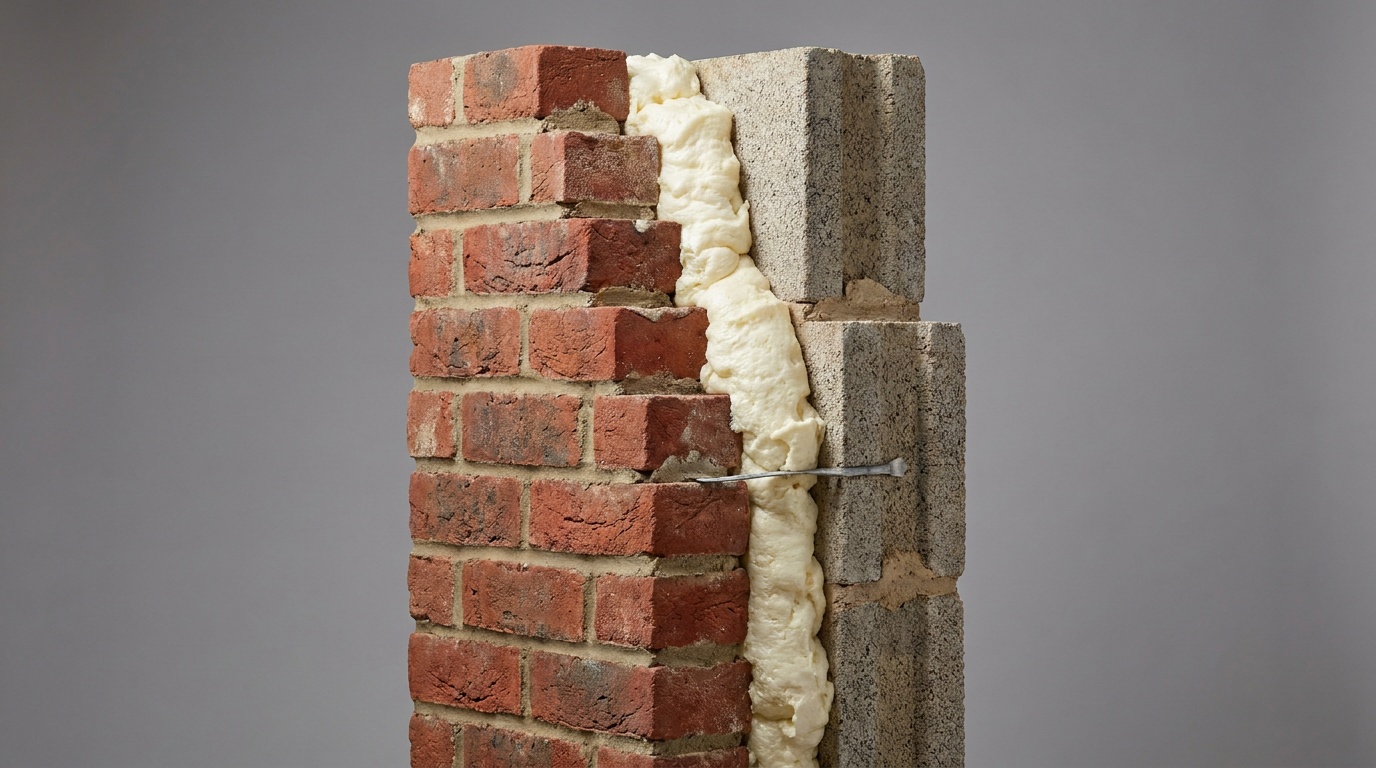
Cavity wall insulation fills — or partially fills — that gap with one of three main materials:
- Mineral wool (rock or glass fibre): Blown in as loose fibres, flexible and relatively breathable
- Polystyrene beads: Small expanded beads, sometimes bonded with an adhesive, good thermal performance
- Urea formaldehyde foam: Now largely out of favour but still present in millions of older properties
The logic is elegant. An unfilled cavity is essentially a column of still air — and still air is actually a reasonable insulator. But in practice, air within the cavity convects (moves in circular currents), transferring heat from the warm inner wall to the cooler outer wall. Filling the cavity with insulation material disrupts those convection currents, dramatically reducing heat loss.
According to the Energy Saving Trust, a semi-detached house with unfilled cavity walls loses approximately 35% of its total heat through the walls. Fill those cavities correctly, and you could genuinely save between £150 and £400 per year on energy bills depending on property size — figures that have become even more significant following the energy price upheavals of recent years that carried through into 2025 and 2026.
The Critical Design Tension
Here’s the problem that nobody in the sales brochure will highlight: the moment you fill that cavity, you fundamentally alter the moisture management system of your wall. That gap wasn’t just an accidental space — it was an engineered drainage channel. Water that penetrated the outer brick could run harmlessly down the inner face of the outer leaf and drain out through weep holes at the base. Fill the cavity, and you’ve potentially created a bridge for moisture to travel from the wet outer wall to the dry inner wall.
Whether that moisture bridge actually forms depends on a complex interplay of factors: the type of insulation material, the quality of installation, the exposure of your property to wind-driven rain, the condition of your external brickwork, and even the prevailing weather patterns in your region.
When Cavity Wall Insulation Works Well
Let’s be clear: for the right property in the right location with proper installation, CWI is an excellent investment. The majority of the estimated 6 million UK homes that received CWI under various government schemes over the past three decades have not experienced significant damp problems. Here’s when the odds are firmly in your favour.
The Ideal Candidate Property
CWI performs best and most reliably in properties that tick the following boxes:
- Built between 1930 and 1990 with standard 50-75mm cavities in good structural condition
- Located in sheltered or moderate-exposure zones — broadly speaking, most of England’s Midlands and South East
- Solid, well-pointed external brickwork with no existing cracks, gaps, or mortar deterioration
- Clear, unobstructed cavities with no existing rubble, bridging debris, or previous partial fills
- Adequate roof overhang and effective guttering to minimise water ingress at wall heads
- Correctly positioned wall ties that slope outward to drain moisture rather than inward
If your property matches this profile and is inspected thoroughly before installation, the risk of moisture issues is genuinely low. A 2024 survey by the Association for the Conservation of Energy found that properly installed CWI in sheltered locations showed damp-related problems in fewer than 4% of properties over a 10-year monitoring period — a reassuringly small figure.
Pro Tip: Ask any installer to conduct a borescope inspection of your cavity before proceeding. A small camera inserted through a drill hole will reveal debris, partial fills, and wall tie conditions that can make or break the success of your installation. Any reputable installer in 2026 should offer this as standard — if they don’t, that itself is a red flag.
When CWI Causes Damp: The Real Risks
Now for the uncomfortable truth that the energy efficiency industry has sometimes been slow to acknowledge. Cavity wall insulation can and does cause serious damp problems in a significant minority of properties — and the consequences can be severe.
The Mechanisms of Moisture Failure
Understanding how CWI causes damp is the first step to assessing your own risk. There are four primary failure pathways:
1. Direct moisture bridging: Insulation material, once wet (from rain penetrating the outer leaf), conducts moisture directly to the inner wall. This is particularly common with mineral wool installations in high-exposure areas where the outer brick is already porous or poorly pointed.
2. Insulation contamination and settling: Over time — particularly with blown mineral wool — the material can shift, settle, or become contaminated with construction debris. This creates voids where air can convect again (negating thermal benefits) and clumping where saturated insulation presses against the inner wall.
3. Wind-driven rain penetration: In exposed coastal or upland locations, wind can drive rain horizontally at significant force. At these wind speeds and rainfall rates, even well-pointed brickwork allows water penetration into the cavity. Without the drainage function that an empty cavity provides, that water has nowhere to go but through the insulation and into your home.
4. Wall tie bridging: Existing wall ties that were already carrying small amounts of mortar droppings or were incorrectly positioned can become moisture bridges themselves, with insulation packing around them and accelerating transfer to the inner leaf.
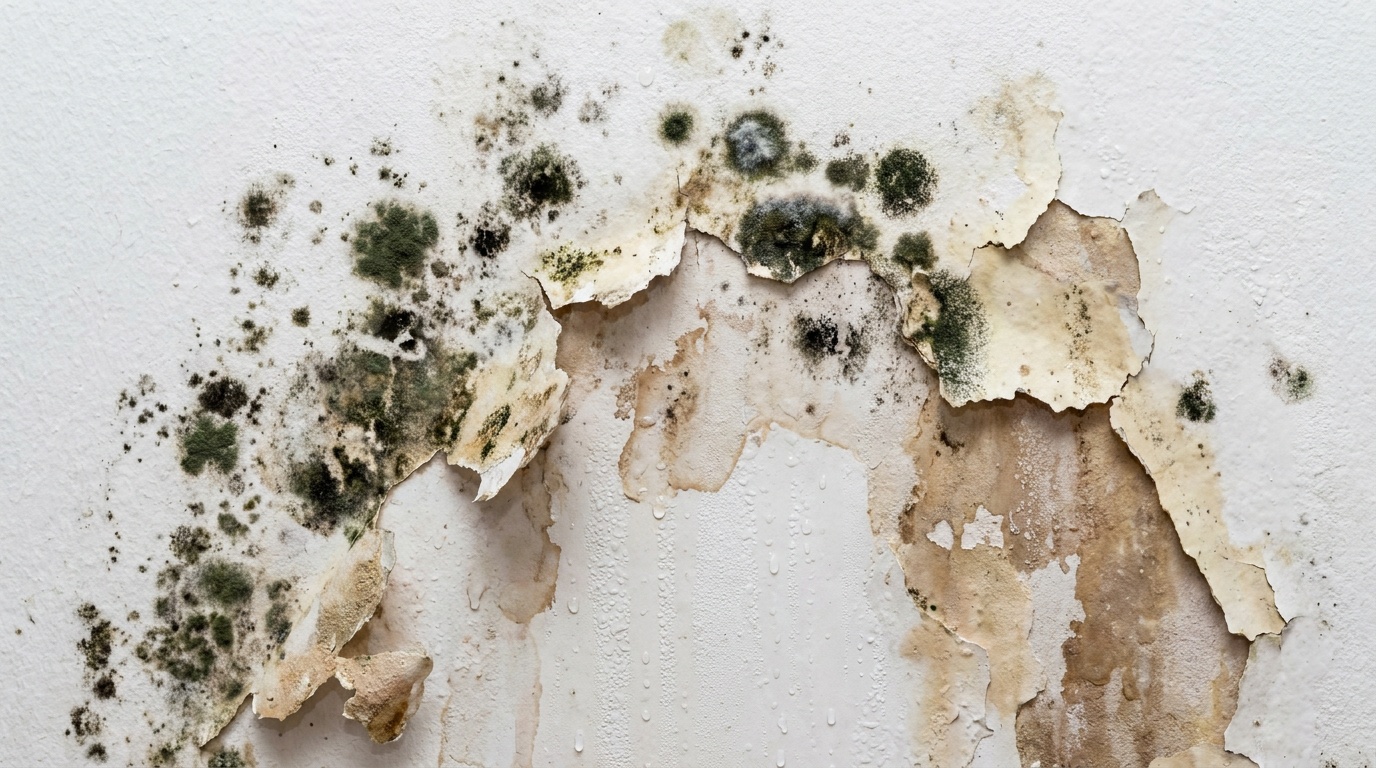
The consequences can range from mild condensation problems to severe penetrating damp, mould growth on internal walls and ceilings, rotting window and door frames, and in extreme cases, structural damage to internal plaster and masonry. The costs of remediation — including possible CWI extraction — can run from £3,000 to £15,000 or more for a typical semi-detached property in 2026.
Real-World Case Studies
Case Study 1: The Sheffield Success Story
In 2024, a family in suburban Sheffield retrofitted their 1960s brick semi-detached with blown mineral wool CWI through a local approved installer. The property was located in a sheltered residential street, had recently been repointed, and was assessed thoroughly — including a borescope camera inspection — before installation. By the winter of 2025-26, the family reported their heating bills had dropped by approximately 28%, and no damp issues had emerged after two full winter seasons. “We were nervous after reading horror stories online,” the homeowner noted, “but the key really was that the installer took the time to assess the property properly rather than just turning up and drilling holes.” This represents the positive outcome that well-executed CWI can deliver.
Case Study 2: The South Wales Damp Disaster
Contrast that with a 1970s terraced house in a coastal town in South Wales, where CWI was installed under a government-backed scheme in 2019. By 2022, the owners noticed patches of damp on internal walls. By 2024, three bedrooms had significant mould growth, plaster had begun to fail, and a structural survey confirmed that moisture was consistently bridging from the outer to inner leaf through the now-saturated insulation. The property sits in a high wind-driven rain exposure zone — a critical factor that was not adequately assessed during the original installation. Remediation in early 2025 required full CWI extraction, cavity cleaning, repointing, and internal replastering. Total cost: approximately £11,500, against original savings of perhaps £200 per year on energy bills. The family has since joined a group of claimants pursuing compensation through the Cavity Insulation Guarantee Agency (CIGA) dispute resolution process.
Performance Data: CWI Across Property Types
| Property Type / Location | Avg. Annual Savings (2026) | Damp Risk Level | Recommended Material | Suitability Verdict |
|---|---|---|---|---|
| Sheltered Midlands semi-detached (post-1950) | £220–£380 | Low (3–5%) | Mineral wool or EPS bead | ✅ Highly suitable |
| Coastal / upland exposed terraced house | £90–£150 (theoretical) | High (25–40%) | Not recommended | ❌ Avoid or use alternatives |
| Pre-1930 solid wall property | N/A (no cavity) | N/A | Internal/external wall insulation | ⚠️ Not applicable |
| Modern detached (post-1990, 100mm+ cavity) | £150–£260 | Low–Moderate (5–12%) | EPS bead or partial fill board | ✅ Generally suitable |
| Rural Welsh/Scottish farmhouse | £100–£200 (if suitable) | Very High (30–50%) | External wall insulation preferred | ❌ High risk — specialist assessment needed |
Exposed Locations and the Wind-Driven Rain Problem
The single most important factor in determining whether CWI is appropriate for your property is wind-driven rain exposure. This is assessed using a metric called the Driving Rain Index (DRI), which combines local annual rainfall figures with typical wind speeds to calculate how much rain is likely to be driven horizontally against your walls.
The UK’s BRE (Building Research Establishment) classifies exposure zones as Sheltered, Moderate, Severe, and Very Severe. Crucially, large areas of Wales, Scotland, Northern Ireland, the South West of England, and most coastal strips fall into Severe or Very Severe categories — yet CWI was installed widely in these areas throughout the 2000s and 2010s, often without adequate exposure assessment.
In 2025, the Scottish Government’s Housing Retrofit Review explicitly acknowledged that “a significant proportion of CWI installations in Scotland were carried out without adequate site-specific exposure assessment, contributing to elevated rates of damp-related complaints.” The review recommended that all future CWI installations in Scotland undergo mandatory DRI assessment before approval — a policy change that took effect in early 2026.
Quick check: You can find your property’s approximate exposure zone using the BRE’s online Driving Rain Index tool. If your postcode falls in a Severe or Very Severe zone, you should treat any recommendation to install standard cavity wall insulation with significant caution, regardless of what any installer tells you.
Can Failed CWI Be Removed?
This is the question that haunts homeowners who are already experiencing problems. The good news: yes, CWI can be extracted. The less-good news: it is expensive, disruptive, and not always fully effective.
The Extraction Process
CWI extraction typically involves drilling a series of holes in the external wall (similar to the original installation holes but more numerous), and using high-powered vacuuming equipment to suck out the insulation material. For mineral wool, this is relatively straightforward. For EPS beads, specialist equipment is required and some beads inevitably remain. For old urea formaldehyde foam, extraction can be extremely difficult as the degraded foam crumbles and clumps.
After extraction, the cavity should be flushed with water to remove residual material, allowed to dry thoroughly — which can take several months — before any consideration of re-insulation. The drill holes are then repointed, and in most cases, the external brickwork will need thorough inspection and repointing throughout.
Internal remediation is typically also necessary: affected plaster must be removed, walls allowed to dry, and replastering carried out with an appropriate breathable lime-based or renovation plaster rather than standard modern plaster mixes.
If your CWI was installed under a government-backed scheme or by a CIGA-registered installer, you may have recourse through CIGA’s guarantee scheme. As of 2026, CIGA guarantees cover properties for 25 years from installation date, and successful claims can fund partial or full remediation costs. The process is not always straightforward, but it is worth pursuing.
Practical Alternatives When CWI Isn’t Right for Your Property
If your property assessment reveals that standard cavity wall insulation carries significant risk, you are not out of options. The insulation industry in 2026 offers a broader and more sophisticated toolkit than the “drill holes and blow in fill” approach that dominated for decades.
- External Wall Insulation (EWI): A layer of rigid insulation board fixed to the outside of the wall and finished with a render or cladding system. Completely bypasses the cavity risk, adds to kerb appeal if well executed, and can deliver excellent U-values. Costs are higher (£8,000–£20,000 for a typical semi) but are increasingly supported by government grants under the 2025 Great British Insulation Scheme extensions.
- Internal Wall Insulation (IWI): Insulation boards or stud-and-batts systems applied to the internal face of external walls. Less disruptive externally, but reduces room sizes slightly and requires careful detailing around windows, doors, and junctions to prevent cold bridging and interstitial condensation.
- Partial-fill cavity boards: For new builds or major refurbishments where the cavity can be accessed fully, rigid insulation boards inserted into the cavity leave a clear drainage gap between the board and the outer leaf — preserving the moisture management function of the original design.
- Insulated render systems: A hybrid of EWI and traditional render, these systems apply a thin insulating layer beneath the external render coat, improving thermal performance without the full scale of a standard EWI system.
The Bar Chart: Damp Risk Probability by Exposure Zone
Estimated Damp Problem Probability After CWI Installation by Exposure Zone
~4%
~12%
~31%
~47%
~60%+
Sources: BRE, CIGA claims data 2023–2025, Association for the Conservation of Energy survey 2024
Frequently Asked Questions
How do I know if my home already has cavity wall insulation installed?
The most reliable method is to hire a professional to drill a small inspection hole in an inconspicuous part of the external wall — typically at mortar joint level — and use a thin metal probe or borescope camera to look into the cavity. Alternatively, check your property’s EPC (Energy Performance Certificate), which should record whether CWI is present. If your home was built after 1990, it almost certainly has some form of insulation already installed as part of building regulations compliance. You can also request a check through CIGA’s online database if your home was insulated under a registered scheme — the database covers millions of UK properties.
My walls feel damp since having CWI installed — what should I do immediately?
First, document everything: photograph the affected areas, note when damp patches appear or worsen (typically following rain events), and keep records of any communications with your installer. Then contact CIGA (Cavity Insulation Guarantee Agency) to report the issue and initiate their assessment process. Do not simply redecorate over the damp — this masks the problem, can make it worse, and may undermine any future warranty claim. Commission an independent damp survey from a qualified surveyor who is not affiliated with your installer. If the CWI was installed under a government scheme, also contact the scheme administrator. In 2026, the Energy Company Obligation (ECO4) scheme has a dedicated complaints handling pathway for retrospective installation issues.
Is cavity wall insulation still worth considering in 2026 given all these risks?
Absolutely — for the right property. With energy prices remaining elevated in 2026 and the UK government’s net zero targets driving strong incentives through schemes like the Great British Insulation Scheme, well-executed CWI remains one of the most cost-effective retrofits available for suitable properties. The key shift in thinking that has emerged from the lessons of the past decade is that assessment quality is everything. Insist on a thorough pre-installation survey including exposure zone classification, borescope cavity inspection, and a check of existing brickwork condition. If any installer dismisses these steps as unnecessary, walk away. The technology and materials available in 2026 are better than ever — the failures of the past were almost always failures of assessment and suitability, not failures of the insulation concept itself.
Your Smart Insulation Roadmap: Making the Right Call
The cavity wall insulation story is ultimately a story about context over blanket advice. The same product that transforms energy efficiency and comfort in a sheltered Midlands terrace can create years of damp misery in an exposed Welsh coastal cottage. Here’s your practical roadmap to navigating this intelligently:
- Check your exposure zone first: Use the BRE Driving Rain Index tool before any other step. If you’re in a Severe or Very Severe zone, CWI is probably not your best option — explore EWI or IWI instead and look at current grant funding available in 2026.
- Inspect before you insulate: Commission a professional pre-installation survey with borescope camera inspection. Budget £150–£300 for this — it’s the cheapest insurance you’ll ever buy against a potential £10,000+ remediation bill.
- Check existing brickwork condition rigorously: Repoint any deteriorated mortar joints and repair any cracks before installation. The insulation can only be as good as the envelope it sits within.
- Use a CIGA-registered installer: In 2026, there is no good reason to use a non-registered installer. Registration requires adherence to PAS 2030 and PAS 2035 standards, which mandate proper assessment protocols and provide you with guarantee protection.
- Monitor your home in the first winter: Check internal walls for any new damp patches after significant rain events. Early detection means far easier and cheaper remediation if anything goes wrong.
As the UK accelerates toward its 2050 net zero commitments, wall insulation — in all its forms — will remain a cornerstone of the national retrofit agenda. The homes that get this right will be warmer, cheaper to run, and more resilient. The key is ensuring your home gets the right solution, not simply the most marketed one.
Here’s the question worth sitting with: When did you last have your cavity walls properly assessed — not by an installer with a financial interest in the outcome, but by an independent professional whose only job is to tell you the truth about your building? In 2026, with better assessment tools, clearer standards, and growing awareness of past mistakes, there has never been a better time to get a genuinely informed answer.
Your home is your largest asset. Treat its energy retrofit with the same diligence you’d apply to any major financial decision — because that’s exactly what it is.
Article reviewed by Mike O’Brien, Drywall Installation & Surface Finishing Specialist, on May 4, 2026