UK Boiler Upgrade Guide: Heat Pump vs. Combi vs. System Boilers
UK Boiler Upgrade Guide: Heat Pump vs. Combi vs. System Boilers (2026 Edition)
Reading time: 14 minutes
Your boiler breaks down on a freezing January morning. You call a heating engineer, and suddenly you’re facing a decision that could cost you anywhere from £2,000 to £15,000 — and you have roughly 48 hours to make it. Sound familiar? You’re far from alone. Every year, hundreds of thousands of UK homeowners face this exact scenario, often without the knowledge to make a truly informed choice.
Here’s the straight talk: the UK heating landscape has changed dramatically. With the government’s push toward net zero, new boiler efficiency regulations introduced in 2025, and the Boiler Upgrade Scheme continuing into 2026, the decision between a heat pump, a combi boiler, and a system boiler is no longer purely about upfront cost. It’s about long-term value, energy performance, your property type, and where UK energy policy is heading.
This guide cuts through the noise. Whether you’re a first-time homeowner in a Victorian terrace or managing a large detached property in the Home Counties, we’ll help you navigate the options with precision — and confidence.
Table of Contents
- The 2026 UK Heating Landscape: What’s Changed
- Combi Boilers: Still the Nation’s Favourite?
- System Boilers: The Unsung Middle Ground
- Heat Pumps: The Future, But Is It Your Future?
- Head-to-Head Comparison Table
- Cost vs. Efficiency: A Visual Breakdown
- Real Homeowner Stories: Three Scenarios
- Common Challenges and How to Overcome Them
- FAQs
- Your Heating Roadmap: Next Steps
The 2026 UK Heating Landscape: What’s Changed
The UK heating industry in 2026 looks markedly different from just three years ago. In 2025, the government confirmed that gas boiler installations in new-build homes would be phased out by 2035, and the Future Homes Standard tightened requirements for all new properties. Meanwhile, the Boiler Upgrade Scheme — which offers £7,500 toward air source heat pump installation — was extended and restructured to include more property types, including leasehold flats in some circumstances.
According to the Department for Energy Security and Net Zero, heat pump installations in the UK reached approximately 120,000 units in 2025, up from 55,000 in 2022. That’s substantial growth — but it still represents a fraction of the estimated 1.7 million boiler replacements carried out annually. Gas and oil boilers still dominate, but the tide is genuinely turning.
“We’re at an inflection point. For the first time, we’re seeing homeowners actively choosing heat pumps not just for environmental reasons, but because the economics are starting to stack up — especially with rising gas tariffs.” — Dr. Sarah Mullen, Senior Energy Analyst, Energy Systems Catapult (2025)
What does this mean for you? It means the decision you make today will have ripple effects well beyond your monthly energy bill. It affects your property’s EPC rating, its resale value, and your exposure to future energy price volatility. Let’s look at each technology in detail.
Combi Boilers: Still the Nation’s Favourite?
The combination boiler — universally known as the “combi” — has been the UK’s default heating solution for decades. It heats water on demand and provides central heating without the need for a separate hot water cylinder or cold water tank. Compact, convenient, and relatively affordable, it’s easy to see why roughly 70% of UK homes with gas central heating use one.
How a Combi Boiler Works
A combi boiler connects directly to the mains water supply. When you turn on a hot tap, the boiler fires up and heats water instantly, passing it through to your tap or shower. For heating, it circulates hot water through your radiator system. There’s no stored hot water, which means no heat loss from a cylinder — but also no buffer if multiple people want hot water simultaneously.
Modern combi boilers carry A-rated efficiency ratings of 89–94%, and units from Worcester Bosch, Vaillant, and Ideal incorporate smart thermostat compatibility as standard in 2026. The best models now include built-in weather compensation, which modulates output based on outdoor temperature — reducing energy waste significantly.
Who Should Consider a Combi Boiler?
- Smaller properties: Flats, terraced houses, and 1-3 bedroom homes with 1-2 bathrooms
- Properties with limited storage space: No room for a hot water cylinder
- Households with low-to-moderate hot water demand: Single occupants or couples
- Budget-conscious upgraders: Installation typically costs £2,000–£3,500 in 2026
- Rented properties: Simplicity and low maintenance make them landlord-friendly
Pro Tip: If you’re replacing a like-for-like combi, check whether your existing pipework is adequate for a modern high-efficiency unit. Many older properties have undersized pipework that can restrict performance — a qualified Gas Safe engineer will assess this during a survey.
One note of caution: combi boilers face a genuine long-term policy headwind. While there’s no ban on replacing existing gas boilers with new gas boilers until 2035, every new combi installation does lock you into gas infrastructure for another 10–15 years. If you’re planning to sell your home within that timeframe, a low EPC rating tied to gas heating could increasingly affect your asking price.
System Boilers: The Unsung Middle Ground
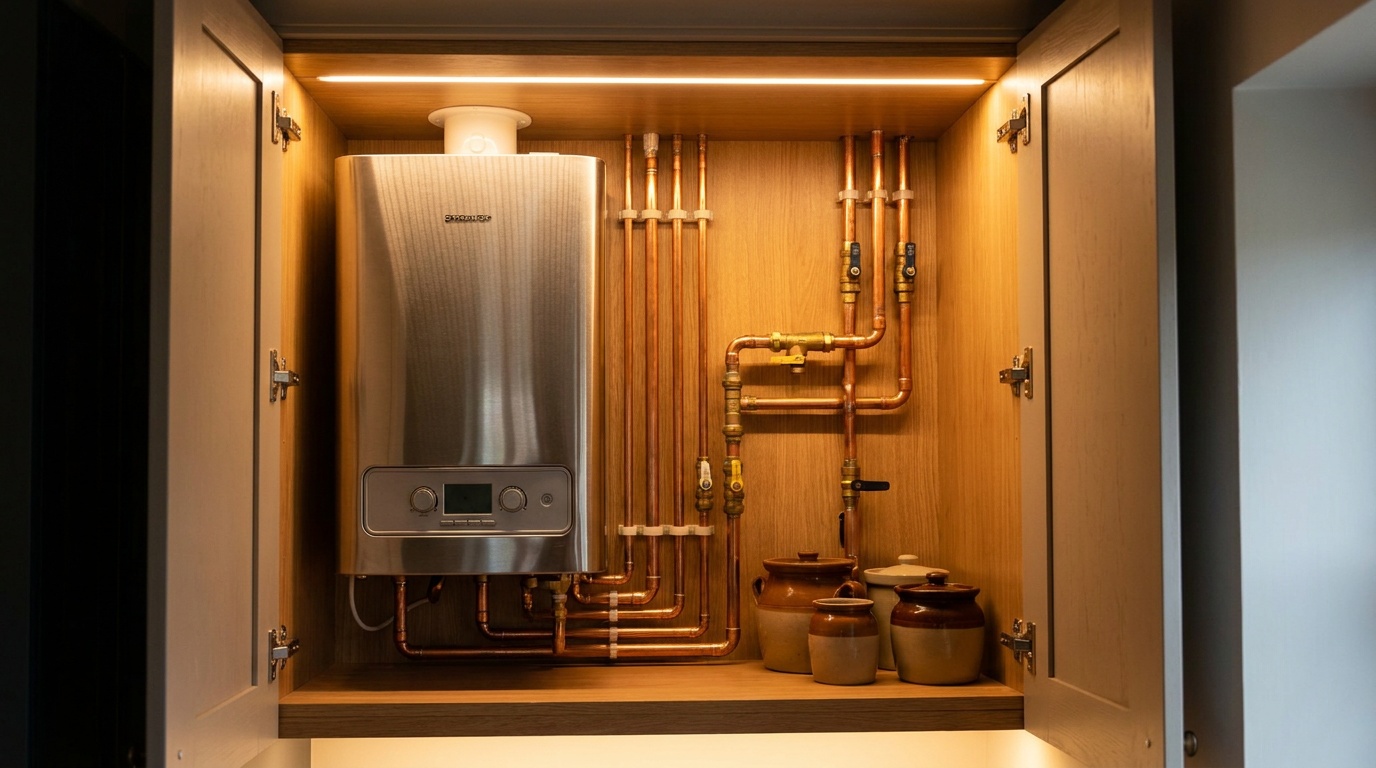
System boilers are often overlooked in conversations dominated by combis and heat pumps, but they deserve serious consideration — particularly for larger families and properties with high hot water demand. Like a combi, a system boiler is connected to the mains and heats the home’s radiators directly. Unlike a combi, it works in conjunction with a hot water storage cylinder, usually housed in an airing cupboard.
This single distinction changes everything. With a stored supply of hot water — typically 150–300 litres — multiple showers can run simultaneously without any pressure drop. For a family of four or five, this is a genuine quality-of-life difference that combi users often underestimate until they experience it.
System Boiler Advantages and Limitations
System boilers contain most of the heating components within the boiler unit itself (pump, expansion vessel, pressure relief valve), making installation cleaner and more compact than older “regular” or “heat-only” boilers. They work exceptionally well with solar thermal panels, which can pre-heat the cylinder water and reduce gas consumption by 15–25% during spring and summer months.
In 2026, system boiler installation costs typically run between £2,500 and £4,500 depending on cylinder size and property requirements. The main limitation is space: you need a dedicated location for the hot water cylinder, ruling them out for many modern flats. They also carry slightly higher heat losses than combis due to the cylinder — though well-insulated modern cylinders minimise this considerably.
Ideal candidates for system boilers include: Homes with 3+ bedrooms and 2+ bathrooms, families of 4 or more, properties already using solar thermal panels, and homes in areas with lower mains water pressure where combis underperform.
Heat Pumps: The Future, But Is It Your Future?
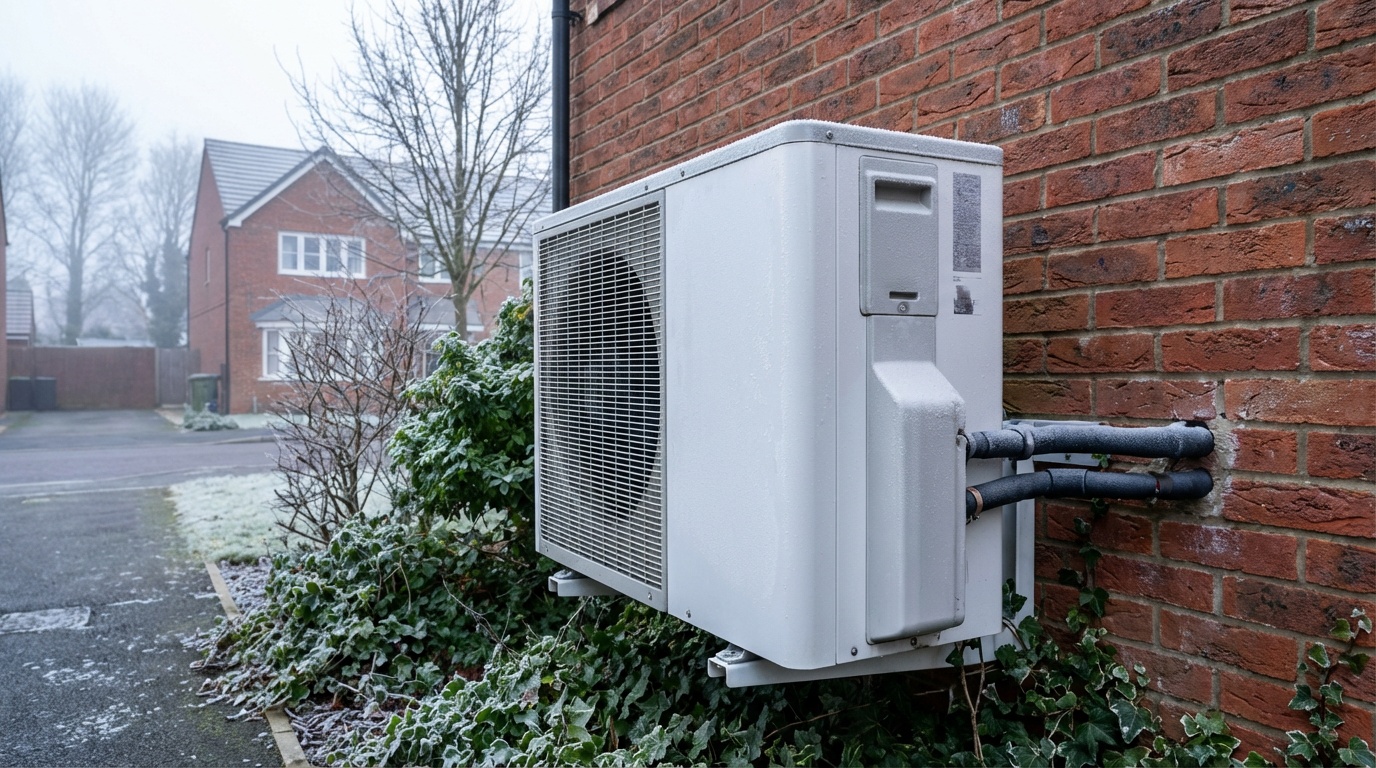
Air source heat pumps (ASHPs) have moved from niche technology to mainstream conversation in the UK. They work by extracting heat energy from outdoor air — even at temperatures as low as -15°C — and concentrating it to warm your home and water. The fundamental efficiency advantage is remarkable: for every 1 unit of electricity consumed, a modern heat pump delivers 2.5–4 units of heat. This ratio, known as the Coefficient of Performance (CoP), is what makes heat pumps so compelling in theory.
The 2026 Financial Picture for Heat Pumps
The Boiler Upgrade Scheme in 2026 provides a £7,500 grant toward ASHP installation for eligible properties in England and Wales. Scotland has its own separate funding through Home Energy Scotland, which can provide up to £9,000 in some circumstances. Even with the grant, total installation costs typically range from £8,000 to £18,000 depending on property size, existing radiator infrastructure, and whether underfloor heating is added.
The running cost equation has improved significantly. With electricity prices stabilising around 24–26p per kWh in 2026 and gas at approximately 6–7p per kWh, the raw fuel cost disadvantage of heat pumps has narrowed — particularly for well-insulated homes where the heat pump achieves high seasonal CoP values of 3.0 or above. The government’s Heat Pump Ready programme has also driven down equipment costs, with entry-level 5kW units now available from £4,500–£6,000 before installation.
Is Your Home Heat Pump Ready?
This is the critical question, and it’s where many homeowners get tripped up. Heat pumps operate most efficiently when delivering lower temperature water (35–45°C) compared to gas boilers (60–80°C). This means your radiators need to be sized generously enough to emit sufficient heat at lower flow temperatures. Many UK homes — particularly those built before 2000 — have undersized radiators that would need upgrading.
Key property requirements for heat pump suitability:
- Good insulation: Loft insulation, cavity wall fill, and ideally double glazing as a minimum
- EPC rating of D or above: Properties with F or G ratings need fabric improvements first
- Adequate outdoor space: For the external unit (typically 0.5–1m² footprint)
- Sufficient electrical supply: Heat pumps typically require a 32–63A supply
- Compatible radiators or underfloor heating: Larger radiators may need to be added
Pro Tip: Request a Manual J heat loss calculation from any heat pump installer before accepting a quote. This calculation determines the precise heat demand of your property room by room, and it’s the foundation of a properly sized system. Any installer who skips this step is cutting corners.
Head-to-Head Comparison Table
| Metric | Combi Boiler | System Boiler | Air Source Heat Pump |
|---|---|---|---|
| Typical Install Cost (2026) | £2,000–£3,500 | £2,500–£4,500 | £8,000–£18,000 (post-grant: £500–£10,500) |
| Running Efficiency | 89–94% (ErP A-rated) | 89–94% (ErP A-rated) | 250–400% (seasonal CoP) |
| Annual Running Cost (avg. 3-bed semi) | £900–£1,400 | £950–£1,450 | £700–£1,100 (well-insulated) |
| Carbon Emissions | High (gas-dependent) | High (gas-dependent) | Low (grid-electricity dependent) |
| Typical Lifespan | 10–15 years | 10–15 years | 20–25 years |
Cost vs. Efficiency: A Visual Breakdown
The chart below compares the estimated 10-year total cost of ownership (installation + running costs) for each heating system in a typical UK 3-bedroom semi-detached property, assuming current 2026 energy prices and the BUS grant applied to heat pumps.
~£15,700
~£16,500
~£13,700
~£19,200
~£11,100
Estimates based on average 2026 UK energy prices, BUS grant deducted for heat pump figures. Individual results will vary based on property specifics, usage habits, and tariff choices.
The visualization tells an important story: insulation is the great multiplier. A heat pump in a poorly insulated home can actually cost more over a decade than a gas boiler. But pair it with proper insulation — and better still, with solar PV panels — and it becomes the most cost-effective option by a meaningful margin.
Real Homeowner Stories: Three Scenarios
Scenario 1: The London Flat Owner
James, 34, owns a two-bedroom flat in Clapham. His 15-year-old combi boiler gave up in February 2026. With no cylinder cupboard, no outdoor space for a heat pump unit, and a leasehold that restricts major structural changes, his options were effectively limited to a like-for-like combi replacement. He went with a Worcester Bosch Greenstar 8000 Life, spending £2,800 fully installed. The new unit is 94% efficient, has weather compensation built in, and he linked it to a Hive smart thermostat. His estimated annual saving versus his old boiler: around £180. Not transformative — but the right decision for his circumstances.
Scenario 2: The Growing Family in Surrey
The Patel family — two adults, three children — moved into a four-bedroom detached house in Guildford in 2024. The existing gas system boiler was functional but old. In early 2026, they commissioned a full heating assessment. The property had cavity wall insulation and a B EPC rating. A heat pump installer calculated a heat loss of 9kW — within the efficient range for a medium ASHP. After applying the £7,500 BUS grant, their net cost for a 10kW Mitsubishi Ecodan system with upgraded radiators in two rooms was £11,200. Their first full winter running cost was £820 — versus an estimated £1,350 on gas. They expect to break even versus a new gas boiler within 8 years.
Scenario 3: The Rural Off-Gas Property in Yorkshire
Carol, 58, lives in a detached stone cottage near Harrogate, previously heated by an oil boiler. With oil prices remaining volatile and her boiler needing replacement, she was strongly motivated to switch. Her property had solid stone walls — expensive to insulate — but good loft insulation and modern double glazing. An ASHP installer recommended a hybrid system: a 5kW heat pump paired with a new condensing oil boiler as backup for the coldest days. Total cost: £9,500 after grant. Her oil consumption dropped by approximately 60%, and her carbon footprint fell substantially. The hybrid approach was the pragmatic middle ground her property demanded.
Common Challenges and How to Overcome Them
Challenge 1: The Upfront Cost Barrier for Heat Pumps
Even with the £7,500 BUS grant, many homeowners baulk at the upfront cost differential between a heat pump and a gas boiler. The gap can feel insurmountable. Solution: Explore financing options actively. Several heat pump manufacturers and energy suppliers now offer 0% or low-interest finance over 5–10 years, which can bring monthly costs below what you’d spend on gas bills. E.ON, Octopus Energy, and British Gas all offer structured payment plans in 2026. Additionally, always check your local council’s energy efficiency schemes — many still operate top-up grants beyond the BUS, particularly in areas with low average incomes or high fuel poverty rates.
Challenge 2: Finding a Trustworthy Installer
The surge in heat pump interest has unfortunately attracted a wave of under-qualified installers. Poor installations — oversized units, inadequate pipework, missing controls — can result in systems that are noisy, inefficient, and costly to fix. Solution: Use only MCS (Microgeneration Certification Scheme) certified installers for heat pumps, as MCS certification is a prerequisite for the BUS grant. For gas boilers, Gas Safe registration is non-negotiable. Always get three quotes, always request references, and always insist on a written design specification before any contract is signed. The Heat Pump Association’s installer directory is a solid starting point.
Challenge 3: Managing a Home During Installation
Heat pump installations can take 2–5 days, during which your home may have no heating or hot water. For families with young children, elderly residents, or medical needs, this is a genuine logistical challenge. Solution: Schedule installations during spring or autumn when heating demands are lowest. Ask your installer to phase the work so that some heating is maintained overnight. Many installers in 2026 now offer temporary electric heating units as part of their service package — ask specifically whether this is included in your quote.
Frequently Asked Questions
Will the UK government ban gas boiler replacements before 2035?
As of 2026, the government’s position is that the gas boiler ban applies to new-build homes from 2025 onward and to all new installations in existing homes from 2035. There is no current proposal to ban the replacement of existing gas boilers with new gas boilers before 2035. However, policy can evolve, and the regulatory trajectory is clearly moving away from fossil fuel heating. If your boiler has 5–8 years of life left, it’s worth beginning to plan now rather than facing a rushed decision under pressure later.
Do heat pumps work in cold UK winters?
Yes — modern air source heat pumps are designed to operate effectively down to -15°C or even -20°C in the case of advanced units from manufacturers like Mitsubishi, Daikin, and Vaillant. The UK’s relatively mild winters (average January temperatures of 2–7°C across most of England) are actually well within the efficient operating range of most ASHPs. Performance does reduce as temperatures drop, but well-designed systems with appropriate sizing maintain comfortable indoor temperatures even during cold snaps. The key is correct sizing and a properly designed distribution system — which is why choosing a certified, experienced installer is so critical.
Can I switch to a heat pump if I still have a mortgage and limited savings?
Absolutely, and the financing landscape in 2026 makes this more accessible than ever. The Boiler Upgrade Scheme grant reduces the capital outlay significantly. Beyond that, Octopus Energy’s “Cosy Octopus” tariff offers cheaper overnight electricity rates specifically designed for heat pump users, which can further improve the running cost economics. Some mortgage lenders — including Nationwide and Barclays — now offer Green Additional Borrowing at preferential rates for energy efficiency improvements including heat pump installations. It’s worth speaking to an independent financial adviser who specialises in green home improvements before dismissing heat pumps on cost grounds alone.
Your Heating Roadmap: Making the Right Call in 2026
The UK heating decision has never been more nuanced — or more consequential. Here’s your practical roadmap for the next steps:
- Assess your property honestly. Before you talk to a single installer, know your EPC rating, your insulation levels, your hot water demand, and your available space. These four factors will eliminate options quickly and save you hours of irrelevant quotes.
- Get a professional heat loss assessment. This applies whether you’re considering a boiler or a heat pump. A properly sized heating system is always more efficient and reliable than an oversized or undersized one.
- Compare lifetime costs, not just installation costs. Use the 10-year total cost of ownership framework. Factor in energy prices, maintenance contracts (annual service: ~£100–£150 for boilers, £120–£200 for heat pumps), and expected lifespan.
- Check every available grant and incentive. The BUS grant, local authority schemes, ECO4 funding for eligible households, and green mortgage products can collectively transform the financial case for heat pumps. Don’t assume you don’t qualify before checking.
- Think about the 2035 horizon. If you’re installing a new gas boiler today, plan for it being your last. Begin budgeting now for the eventual transition, and prioritise insulation improvements in the meantime — they reduce your heating bills today and make a future heat pump cheaper to run.
The broader trend is unmistakable: the UK is electrifying its heating, and the pace is accelerating. By 2030, industry forecasts suggest heat pump installations could reach 500,000 per year. Early adopters with well-insulated homes are already seeing the financial benefits. Those who wait may face a more competitive installer market and potentially reduced grant availability.
So here’s the question worth sitting with: When your boiler finally calls it quits, will you be ready with a plan — or will you be making a £15,000 decision in 48 hours? The best time to start thinking about your heating future is right now, while you still have the luxury of time on your side.
Article reviewed by Mike O’Brien, Drywall Installation & Surface Finishing Specialist, on May 4, 2026