Conservatory vs. Orangery vs. Garden Room: Which Extension Is Best?
Conservatory vs. Orangery vs. Garden Room: Which Extension Is Best?
Reading time: 12 minutes
You’ve finally decided to extend your home and blur that boundary between your living space and the garden. Brilliant idea. But now comes the real challenge: do you go with a classic conservatory, an elegant orangery, or a versatile garden room? Each option promises to transform your property — yet each comes with its own personality, price tag, and practical limitations.
Here’s the straight talk: there is no single “best” extension. There’s only the best extension for your specific situation. And understanding the differences in depth — not just surface-level comparisons — is what separates a transformative home improvement from a costly regret.
In 2026, UK homeowners are investing more than ever in home extensions, with the home improvement market reaching an estimated £42 billion annually. Garden-facing extensions are leading the charge, driven by remote working habits, rising property prices, and a cultural shift toward indoor-outdoor living. So the stakes have never been higher — or the opportunities more exciting.
Let’s cut through the marketing noise and give you a precise, practical roadmap to making the right choice.
Table of Contents
- What Are They? Defining Each Extension Type
- Key Differences: Structure, Glass, and Thermal Performance
- Cost Breakdown in 2026
- Planning Permission and Building Regulations
- Best Use Cases: Which Suits Your Lifestyle?
- Real-World Case Studies
- Head-to-Head Comparison Table
- Homeowner Satisfaction: Data Visualization
- Common Challenges and How to Overcome Them
- FAQs
- Your Smart Extension Roadmap
What Are They? Defining Each Extension Type
Before diving into comparisons, it’s worth establishing clear definitions. These three extension types are often conflated in marketing materials, leaving homeowners confused about what they’re actually buying.
The Conservatory
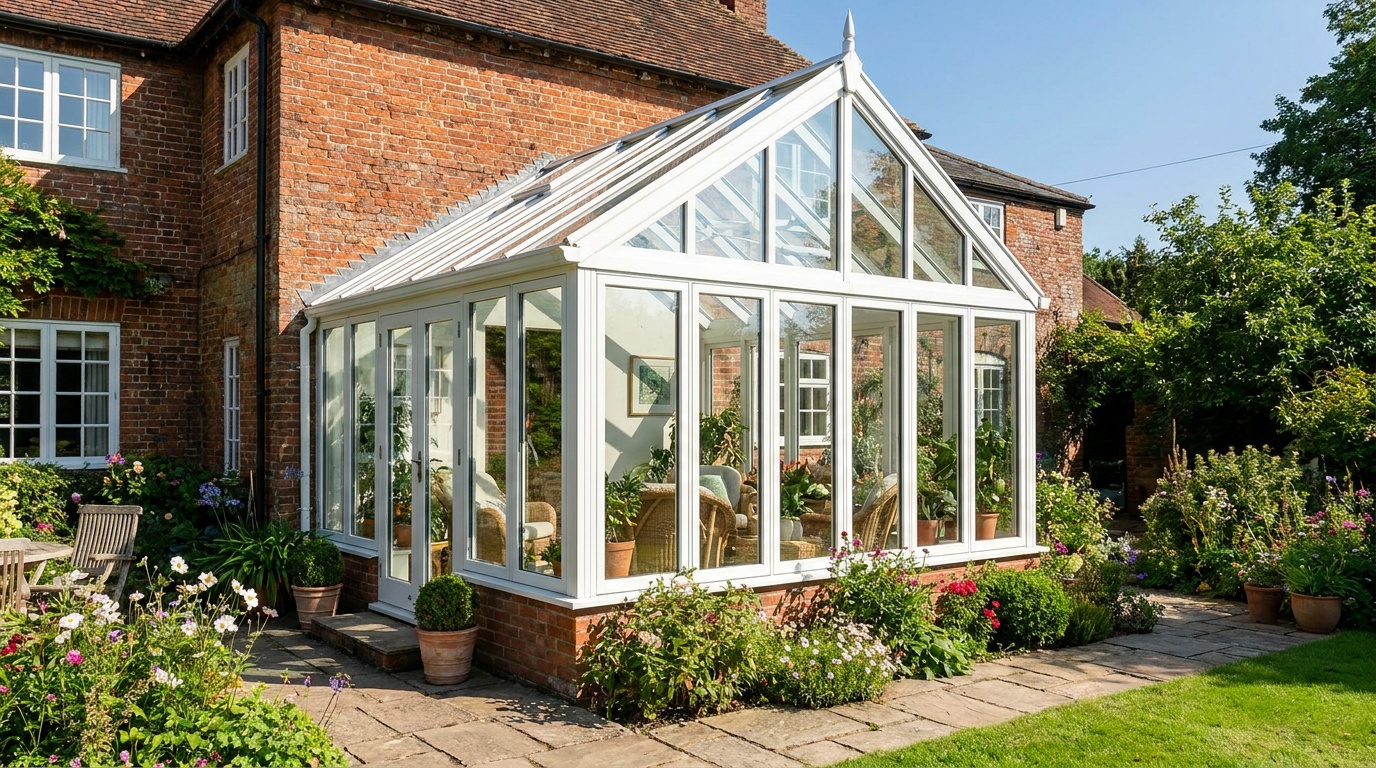
A conservatory is the most recognisable of the three: a predominantly glass structure attached to your home, typically featuring a glass or polycarbonate roof that covers more than 75% of the roof area, and glass walls that constitute more than 50% of the wall space. Originating in Victorian Britain as spaces to cultivate exotic plants, conservatories evolved throughout the 20th century into casual living spaces. Their defining characteristic is their transparency — they flood with natural light and offer panoramic garden views.
Conservatories are generally the most affordable option and quickest to install, but their thermal performance has traditionally been their Achilles’ heel — roasting in summer, freezing in winter. Modern conservatories with thermally-broken frames and self-cleaning, solar-control glazing have significantly addressed this, but the fundamental challenge remains.
The Orangery
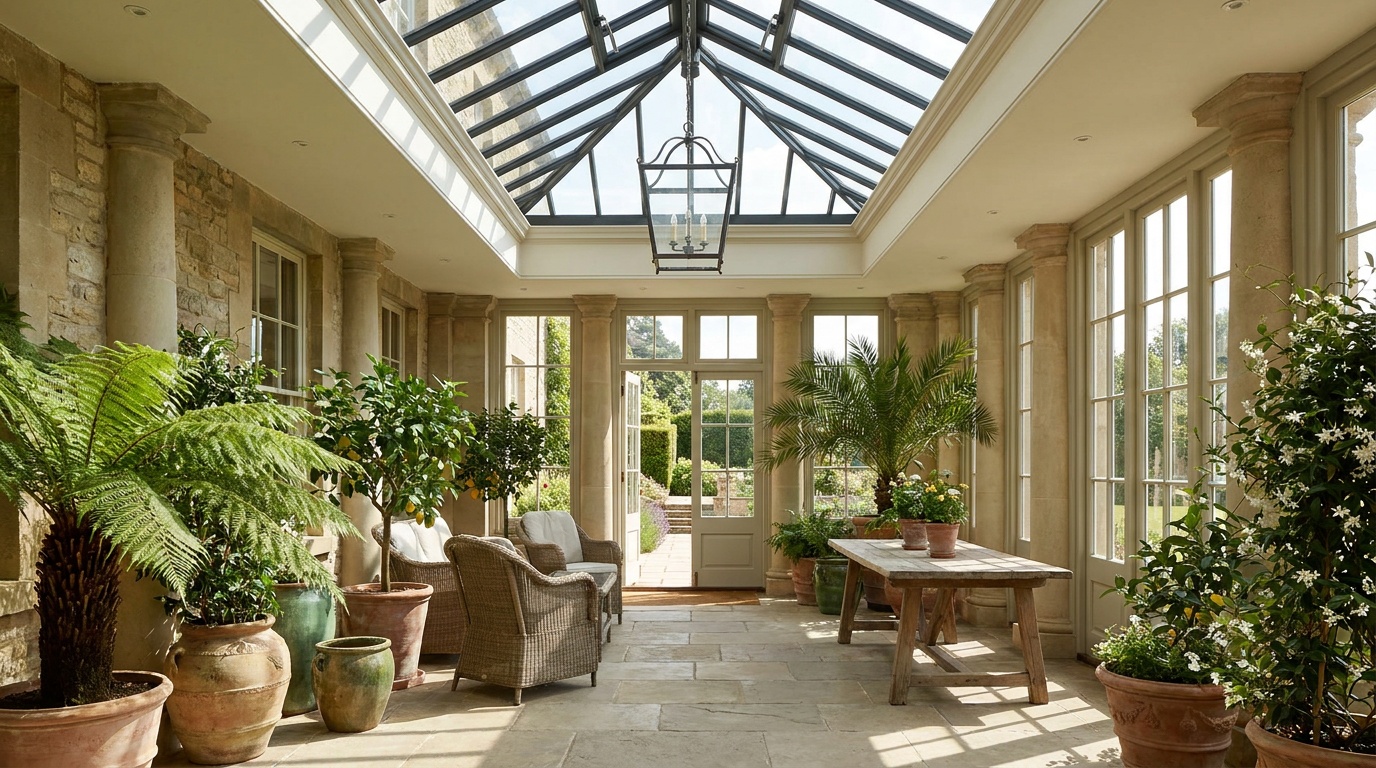
Historically, orangeries were grand structures found in aristocratic estates — solid brick buildings with large windows used to shelter citrus trees through winter. The modern orangery is a sophisticated hybrid: it combines substantial brick or stone pillars and a largely solid perimeter wall with large glazed sections and a central lantern roof light. This blend gives it a more architectural, permanent feel than a conservatory.
An orangery typically feels like a genuine room extension rather than a glass bolt-on. It integrates more naturally with the main house structure, often with matching brickwork, and offers considerably better year-round thermal performance. It sits at a higher price point but adds more substantial value to your property.
The Garden Room
The garden room is the modern disruptor. Unlike the other two, a garden room is a fully insulated, standalone or attached structure built to the same thermal standards as your main home. It’s designed from the ground up to be a usable, comfortable room in all seasons — not a transitional space between inside and outside. Garden rooms can house home offices, gyms, art studios, spare bedrooms, or entertainment spaces.
In 2025 and 2026, the surge in remote working has propelled garden rooms to unprecedented popularity. According to the HomeOwners Alliance’s 2026 survey, 34% of homeowners who built a garden room cited remote working as the primary driver — up from just 19% in 2022.
Key Differences: Structure, Glass, and Thermal Performance
Structural Composition
The structural DNA of each extension tells you everything about how it will perform over time:
- Conservatory: Lightweight aluminium or uPVC frame, predominantly glazed roof, minimal masonry. Quick to build, relatively easy to modify.
- Orangery: Substantial masonry base walls and pillars (matching your home’s brickwork), glazed upper sections, central flat or pitched roof with a glazed lantern. Feels architecturally coherent.
- Garden Room: Timber or steel frame with solid insulated walls, solid insulated roof (sometimes with skylights), full-height glazed doors or windows as design features rather than the primary structure.
Glazing and Light
If natural light is your priority, the conservatory wins outright — its glass-dominant construction ensures your space is bathed in daylight. Orangeries offer a beautiful balance, with large windows and the dramatic focal point of a roof lantern. Garden rooms have the least glazing by default, though contemporary designs often incorporate large bi-fold or sliding doors and carefully positioned roof lights to maximise light intake.
Thermal Performance in 2026
This is where the conversation gets critical. Building Regulations Part L (Thermal Insulation) were updated in England and Wales in 2022 and continue to influence how extensions must perform. However, conservatories and orangeries that meet specific criteria (being separated from the house by external-quality doors, having their own heating) can still receive exemptions.
A garden room built to current standards will typically achieve a U-value of 0.18 W/m²K for walls and 0.13 W/m²K for roofs — comparable to a new-build home. A modern conservatory with double-glazed units might achieve wall U-values of around 1.4–1.8 W/m²K through the glass. The practical difference? A well-built garden room is comfortable year-round with minimal heating cost. A conservatory without significant investment in advanced glazing still struggles in temperature extremes.
Cost Breakdown in 2026
Costs have risen noticeably since 2023, driven by materials inflation, increased labour costs, and higher demand. Here’s what you should realistically budget in 2026:
Conservatory Costs
- Entry-level uPVC conservatory (3m x 3m): £8,000 – £14,000 including installation
- Mid-range aluminium conservatory (4m x 3m): £18,000 – £28,000
- Premium bespoke conservatory with solid roof: £30,000 – £50,000+
Orangery Costs
- Standard orangery (4m x 4m): £35,000 – £55,000
- Large premium orangery (5m x 5m or more): £60,000 – £90,000+
Garden Room Costs
- Compact garden office/room (3m x 4m): £15,000 – £25,000
- Mid-range garden room with full utilities (4m x 5m): £28,000 – £45,000
- Premium bespoke garden room (6m x 4m+): £50,000 – £80,000+
Pro Tip: Don’t forget to factor in groundworks, electrics, plumbing (if required), planning applications, and landscaping reinstatement. These can add 15–25% to quoted prices. Always request itemised quotes from at least three specialist contractors.
Planning Permission and Building Regulations
Navigating the planning landscape is one of the most common sources of anxiety for homeowners — but it needn’t be. Here’s a clear breakdown:
Permitted Development Rights
In England (rules vary in Scotland, Wales, and Northern Ireland), many home extensions can be built under Permitted Development (PD) rights without requiring full planning permission, subject to size and siting restrictions:
- Conservatories and orangeries: Can typically be built under PD if they don’t exceed 50% of the original house’s land area, don’t extend beyond the rear wall by more than 4m (detached) or 3m (semi/terrace), and are no higher than 4m.
- Garden rooms: Separate outbuildings can be built under PD if they don’t exceed 2.5m in height (if within 2m of a boundary), cover no more than 50% of the original garden, and are not forward of the principal elevation. Attached garden rooms follow house extension rules.
Important 2026 Update: If you live in a Conservation Area, Area of Outstanding Natural Beauty, or your property is Listed, Permitted Development rights are significantly restricted. Always check with your Local Planning Authority before commencing work.
Building Regulations
Building Regulations approval (separate from planning permission) is required for most substantial extensions. This covers structural integrity, fire safety, electrics, drainage, and thermal performance. Conservatories under a certain size may be exempt from Building Regulations if thermally separated from the house — but this exemption is tightening as the UK moves toward net-zero building standards.
Best Use Cases: Which Suits Your Lifestyle?
This is where your decision should really be grounded. Not in aesthetics or budget alone — but in how you actually intend to use the space.
Choose a Conservatory If…
- You want a light-filled, garden-connected dining or lounging space primarily used in spring, summer, and autumn
- Budget is a primary constraint and you still want a significant additional living area
- You love plants and want a quasi-greenhouse feel
- You’re happy to manage temperature with blinds, fans, and occasional heating rather than expecting year-round climate control
Choose an Orangery If…
- You want a premium, architecturally integrated extension that feels like a genuine new room
- You prioritise a sophisticated aesthetic with solid walls and a statement roof lantern
- You want better year-round usability than a conservatory but still value generous natural light
- The extension will be used as a formal dining room, kitchen extension, or living space that’s integral to daily life
Choose a Garden Room If…
- You need a genuinely functional, year-round workspace, gym, studio, or additional bedroom
- Thermal comfort and acoustic performance are non-negotiable
- You want flexibility in design — garden rooms can range from contemporary clad structures to traditional-style outbuildings
- You’re adding a separate-use space and don’t need it connected to the main house
Real-World Case Studies
Case Study 1: The Hartley Family — Conservatory Refresh, Surrey (2025)
The Hartleys had a 20-year-old polycarbonate-roofed conservatory that was unusable in summer and winter alike. Rather than replacing it entirely, they invested £22,000 in upgrading to a solid tiled roof with inbuilt skylights, new thermally-broken aluminium frames, and underfloor heating. The result was a space they now use 11 months of the year as a dining room. “We nearly tore it down,” said homeowner Sarah Hartley, “but the solid roof upgrade transformed it completely. It’s now the favourite room in the house.” Property value impact: an independent RICS valuation estimated a £35,000 increase in property value.
Case Study 2: Marcus Webb — Garden Room Home Office, Manchester (2026)
Marcus, a freelance architect, commissioned a bespoke 5m x 4m garden room in early 2026. Total cost: £48,000, including a green sedum roof, full electrical installation, ethernet cabling, and climate control. He runs his entire practice from the space. “The ROI was immediate,” he explains. “I was previously renting a co-working desk at £450/month. The garden room paid for itself in under ten years — and it’s added genuine value to the property.” His energy bills for the space run at approximately £85/month year-round.
Case Study 3: The Patel Family — Orangery Kitchen Extension, Bristol (2025)
The Patels extended their Victorian terrace with a 4m x 4.5m orangery-style kitchen extension. The project cost £68,000 including a fully bespoke kitchen installation. Matching hand-made bricks were sourced from a reclamation yard to ensure continuity with the original Victorian fabric. The result is a space that genuinely looks like it was always part of the house. Estate agents in 2026 estimated the addition increased the home’s value by approximately £75,000 in Bristol’s competitive property market.
Head-to-Head Comparison Table
| Metric | Conservatory | Orangery | Garden Room |
|---|---|---|---|
| Average Cost (mid-range) | £18,000–£28,000 | £35,000–£55,000 | £28,000–£45,000 |
| Year-Round Usability | Moderate (with upgrades) | Good | Excellent |
| Natural Light | Excellent | Very Good | Good (design dependent) |
| Property Value Added | 5–7% average | 8–12% average | 5–10% average |
| Planning Complexity | Low–Medium | Medium | Low–Medium |
Homeowner Satisfaction Ratings (2026 Survey Data)
Based on a 2026 UK homeowner survey of 1,200 respondents who had built one of these three extension types, satisfaction was rated out of 10 across key criteria:
Garden Room — Year-Round Comfort (9.1/10)
Orangery — Aesthetic Integration (8.7/10)
Conservatory — Natural Light Satisfaction (8.5/10)
Orangery — Value for Money (7.4/10)
Conservatory — Year-Round Comfort (6.2/10)
Common Challenges and How to Overcome Them
Challenge 1: Overheating in Summer
This is the most frequently cited complaint for both conservatories and glass-heavy orangeries. Solar gain through glazing can push temperatures well above 30°C on a sunny day, making spaces genuinely unusable.
Solutions: Invest in solar-control glass (look for a solar factor of 0.3 or below). External solar shading — blinds or louvres positioned outside the glass rather than inside — can reduce solar gain by up to 70%. Roof vents and opening ridge systems dramatically improve air circulation. For orangeries, specifying a thermally broken aluminium frame rather than uPVC makes a meaningful difference at higher temperatures.
Challenge 2: Getting Planning Permission in Conservation Areas
If your property is in a Conservation Area or is Listed, even a modest extension can trigger complex planning requirements. Applications can take 8–13 weeks, and there’s no guarantee of approval.
Solutions: Engage a planning consultant or architect with specific local authority experience before submitting. A pre-application planning enquiry (available from most councils for a fee of £100–£350) can save enormous amounts of time and money by clarifying the planning authority’s likely position in advance. Choosing materials — brick, slate, timber — that respect the character of the area significantly improves approval chances.
Challenge 3: Choosing Between Lifestyle and Budget
Many homeowners find themselves caught between wanting a garden room (for genuine year-round use) but only having a conservatory budget. This is an extremely common dilemma in 2026 as construction costs remain elevated.
Solutions: Consider a hybrid approach: a conservatory with a solid insulated roof upgrade. This significantly improves thermal performance at a fraction of the cost of a full garden room. Alternatively, phase your project — build a well-insulated, modest garden room now and landscape or extend later. A smaller, better-built space will always outperform a larger, poorly-built one.
Frequently Asked Questions
Do I Need Planning Permission for a Garden Room in 2026?
In most cases in England, a detached garden room can be built under Permitted Development rights without a formal planning application, provided it meets certain conditions: it must not exceed 2.5m in height if within 2m of a boundary (or 4m for a dual-pitched roof elsewhere), must not cover more than 50% of the garden, must not be positioned forward of the principal elevation, and cannot be used as self-contained living accommodation. However, rules differ in Wales, Scotland, and Northern Ireland, and stricter controls apply in Conservation Areas and for Listed Buildings. Always verify with your Local Planning Authority before starting work.
Which Extension Adds the Most Value to My Property?
In 2026, orangeries consistently deliver the highest percentage value uplift — typically 8–12% of property value — because they’re perceived as permanent, high-quality architectural additions. However, garden rooms are closing the gap rapidly, particularly in urban markets where home office space commands a premium. Conservatories add value too (typically 5–7%) but can actually detract from value if poorly maintained or if they feature outdated polycarbonate roofs. The key principle: quality of execution matters more than the type of extension. A beautifully designed conservatory will always outperform a poorly built orangery.
Can I Use a Garden Room as a Home Office Year-Round?
Absolutely — and it’s one of the strongest use cases for a garden room in 2026. A properly insulated garden room with adequate heating, ventilation, and electrical installation is genuinely comfortable year-round. You should specify a minimum of 100mm insulation in walls and floor, and 150mm in the roof, to achieve U-values comparable to new-build standards. Pair this with an efficient electric or air-source heat pump system and you can maintain a comfortable working temperature for a very reasonable running cost. Fibre broadband can be run via armoured cable to the structure for reliable connectivity — a non-negotiable for professional use.
Your Smart Extension Roadmap: Making the Decision That’s Right for You
You’ve absorbed a lot of information — now let’s convert it into clear, decisive action. Here’s your practical roadmap for moving forward with confidence:
- Define your primary use case first. Before looking at a single brochure or getting a single quote, write down exactly how you intend to use this space. Daily or occasional? Work or leisure? All seasons or primarily summer? Your answer determines your structure before budget even enters the conversation.
- Get a pre-application planning consultation. For any significant extension in 2026, this £100–£350 investment can save thousands and weeks of frustration. Know your planning position before you fall in love with a design.
- Obtain at least three specialist quotes — not general builders. Conservatory specialists, orangery builders, and garden room manufacturers each bring specific expertise. Compare them on like-for-like specifications, not just headline prices.
- Prioritise thermal performance over aesthetics. You’ll thank yourself every January. Specify U-values in writing, check frame specifications, and ask for references from previous clients who’ve used the space in winter.
- Think long-term value, not just upfront cost. A £45,000 garden room that you use daily for a decade, that adds £40,000 to your property value, and that costs you less to run than a £20,000 conservatory is transparently the better investment — even if it doesn’t feel that way on day one.
The home extension market in 2026 is being shaped by two powerful forces: the ongoing hybrid working revolution and the UK’s net-zero building agenda. Extensions that deliver genuine thermal efficiency and flexible, multi-purpose use will hold their value — and their relevance — far longer than those built purely for aesthetics.
You’re not just building an extension. You’re shaping how you live, work, and connect with your home for the next decade and beyond. Which space would genuinely transform your daily life — and are you building it to the standard it deserves?
Article reviewed by Mike O’Brien, Drywall Installation & Surface Finishing Specialist, on May 4, 2026